THE PATTERN & DECORATION MOVEMENT, 1975-1985
Extended through November 25, 2025
Installation Views | Essay | For availability and pricing, call 212-581-1657.

Installation Views
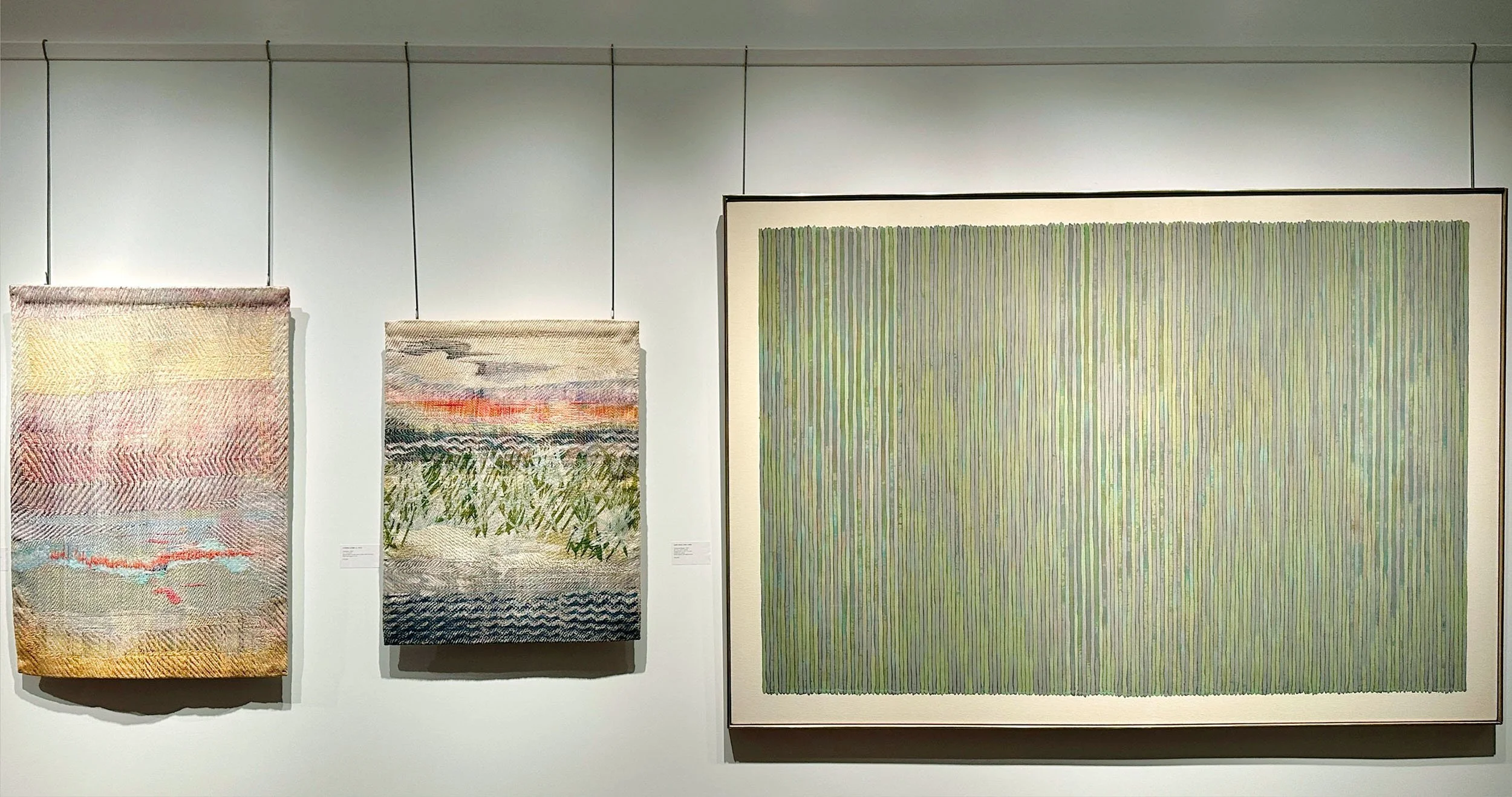
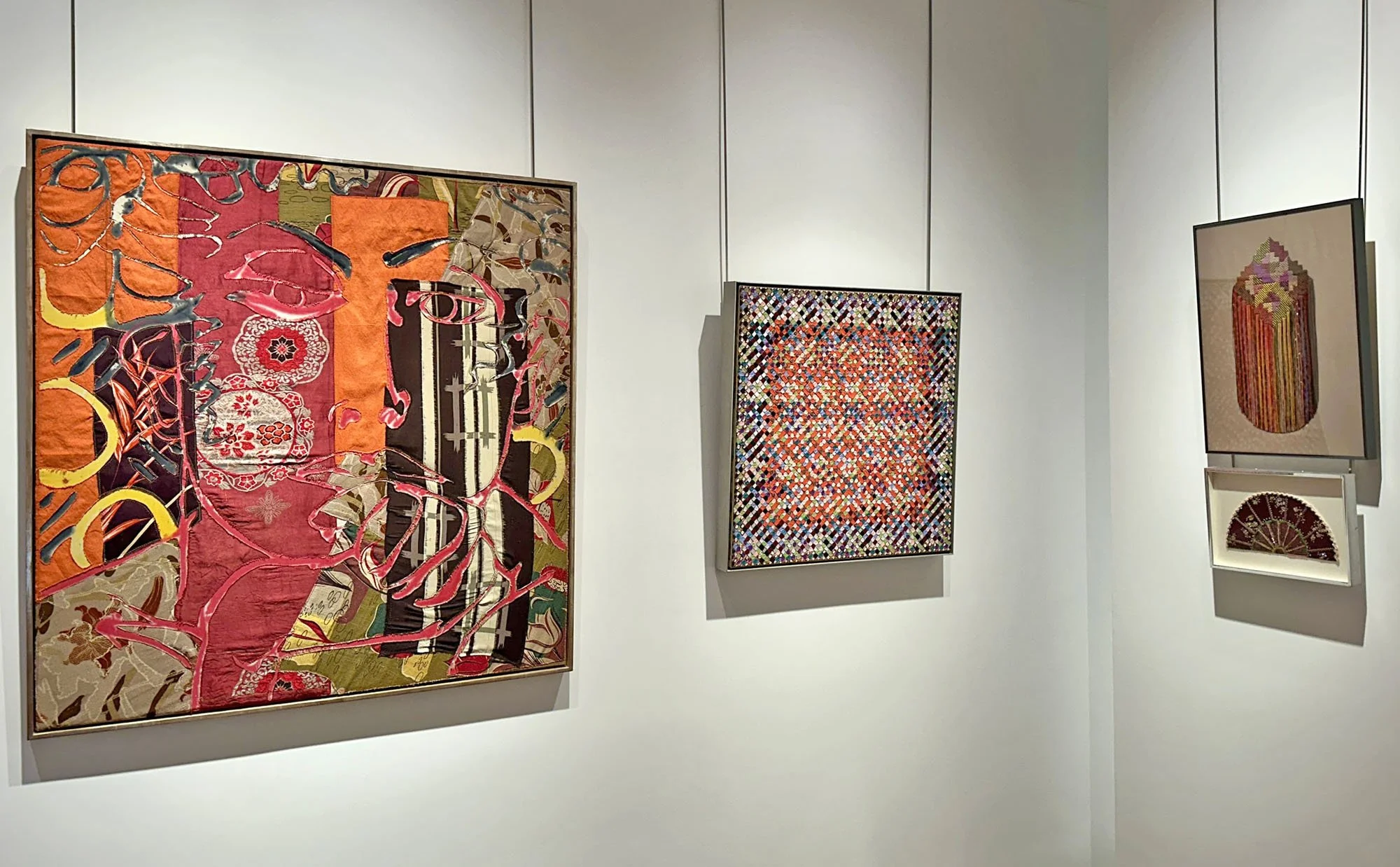
Essay by Emily Lenz
The exhibition A Return to Beauty: The Pattern and Decoration Movement, 1975–1985 celebrates the birth of a new art style with 23 works by 9 artists. The Pattern & Decoration (P&D) artists insisted that beauty, pattern, and ornament were not embellishments but central to artistic expression. This challenged both the reductive aesthetics of Modernism and the hierarchy of art materials. These artists elevated craft techniques by referencing them in their paintings, sculptures, and textile work. Minimalism dominated the art world in the 1970s but three key events in the decade provided opportunities to re-evaluate the place of pattern and decoration. First, the Freer Gallery in Washington, DC expanded the collection of Japanese vases in James McNeil Whistler’s Aesthetic interior, the Peacock Room (1877), to look closer to the artist’s original decorative intention. Next, the first Islamic Art galleries opened at the Metropolitan Museum of Art in 1975 with mosaics, tiling, objects, and rugs installed to give a sense of its architecture. Finally, The National Gallery’s Matisse cut-out exhibition in 1977 presented the joy of colorful floating shapes and repeating patterns.
The Pattern and Decoration artists embraced multiplicity and sensory richness. They drew inspiration from sources historically excluded from the canon of Western Modernism like Islamic tiles, Japanese Kimono patterns, Persian miniatures, American quilting, Mexican folk art, and Baroque ornament. Rather than restricting themselves to the materials and techniques of fine art, P&D artists drew freely from the visual languages of craft, architecture, and functional objects from around the globe. Instead of seeing pattern as ornamental “surface,” they understood it as a structure or organizing grid used across cultures and time. Quilting, embroidery, weaving, and mosaic were brought into direct dialogue with painting and sculpture. The P & D artists reveled in repetition, layering, surface interest, kaleidoscopic color, and intricate design.
The artists Miriam Schapiro (1923-2015), Robert Kushner (b. 1949), and Kendall Shaw (1924-2019) in our exhibition were present at the early gatherings held at Robert Zakanitch’s New York studio, where the ideas that shaped Pattern & Decoration were first discussed. Dee Shapiro (b. 1936) joined Schapiro, Kushner, and Shaw in Pattern Painting at P.S.1 Contemporary Art Center in 1977. Diane Itter (1946-1989) was included along with Schapiro, Kusher, and Shapiro in Patterns Plus at the Dayton Art Institute in 1979. Nancy Graves (1939-1995) was included along with Schapiro and Kushner in New Decorative Art at the Berkshire Museum in 1983.
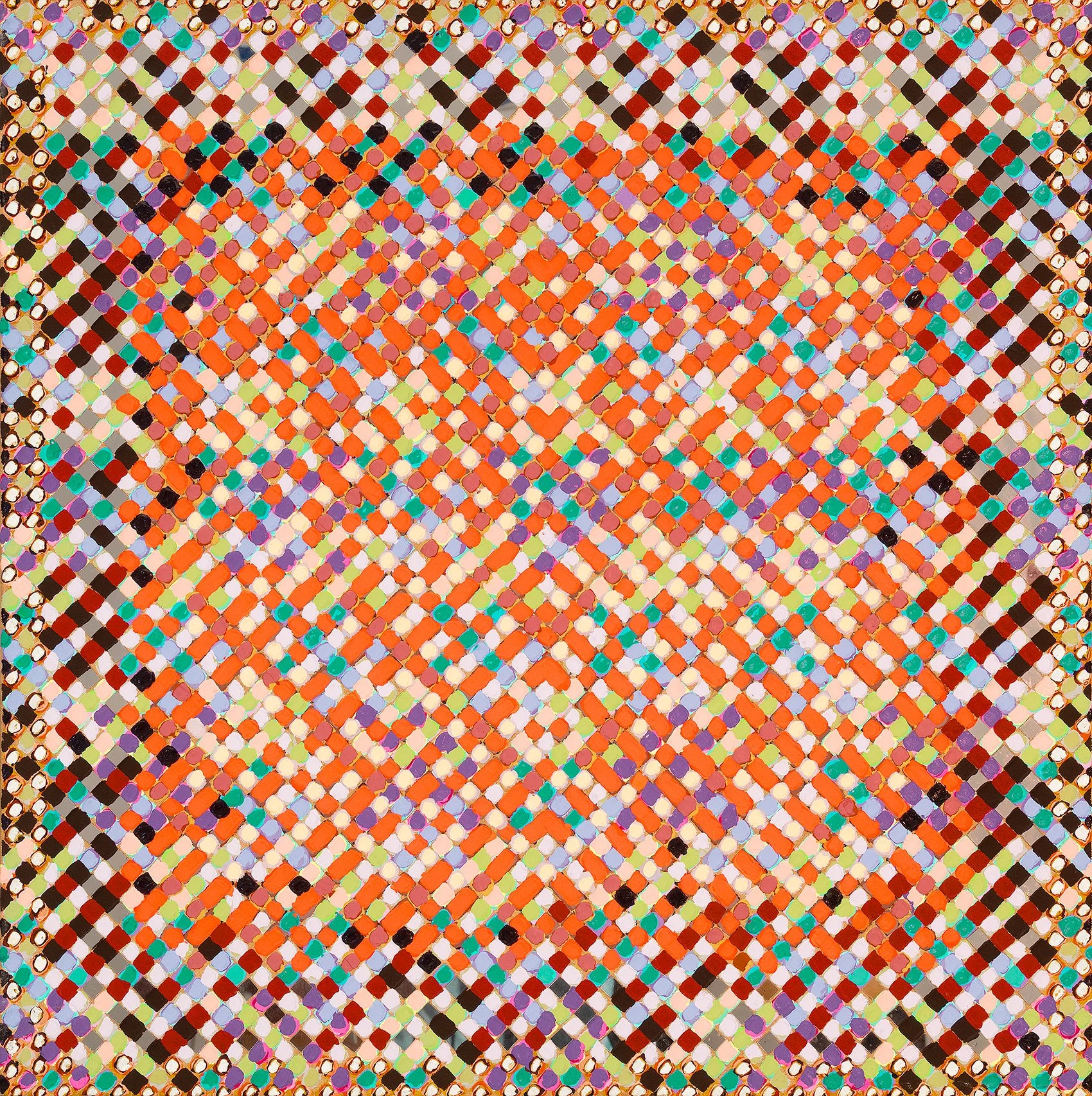
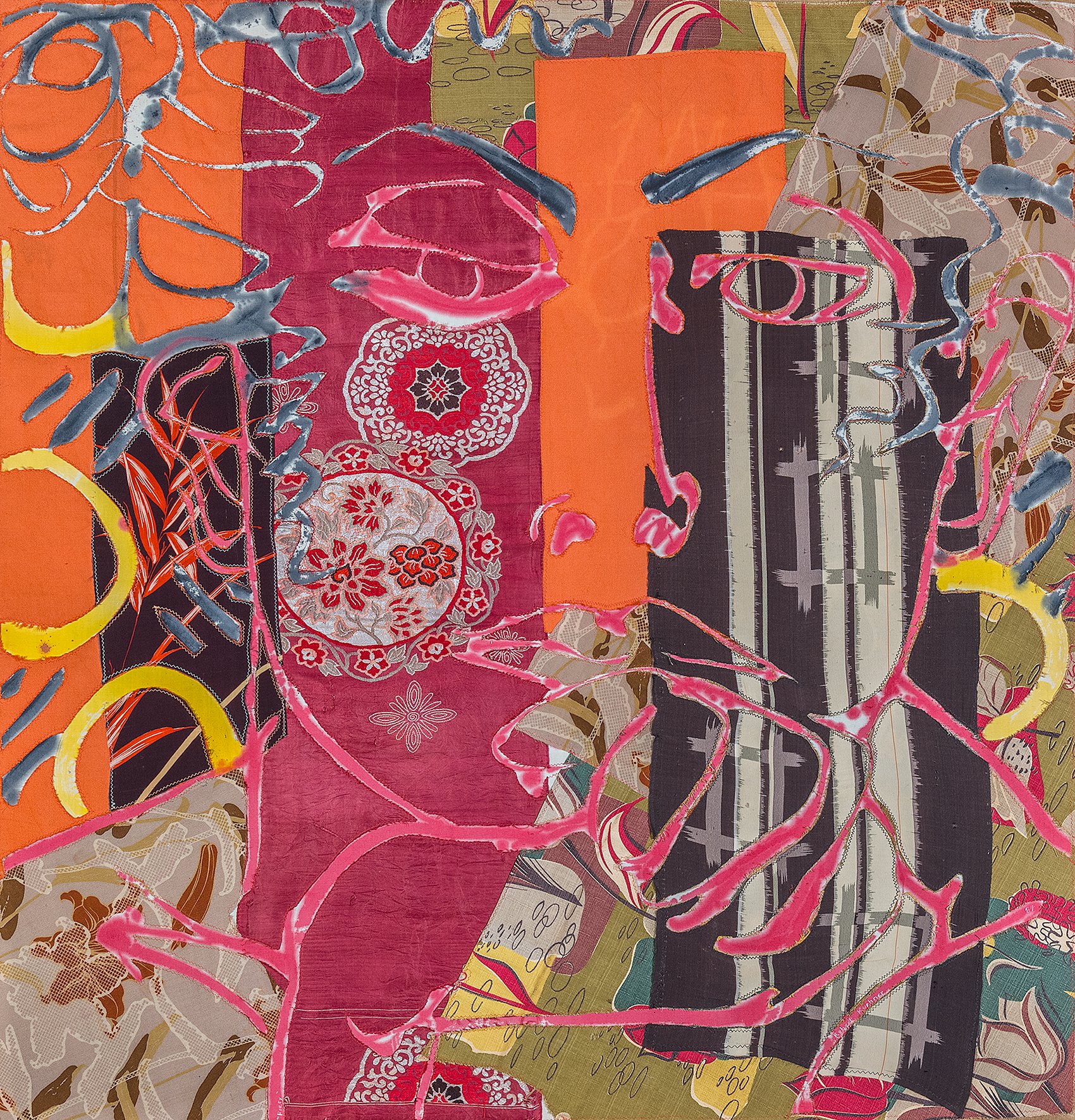
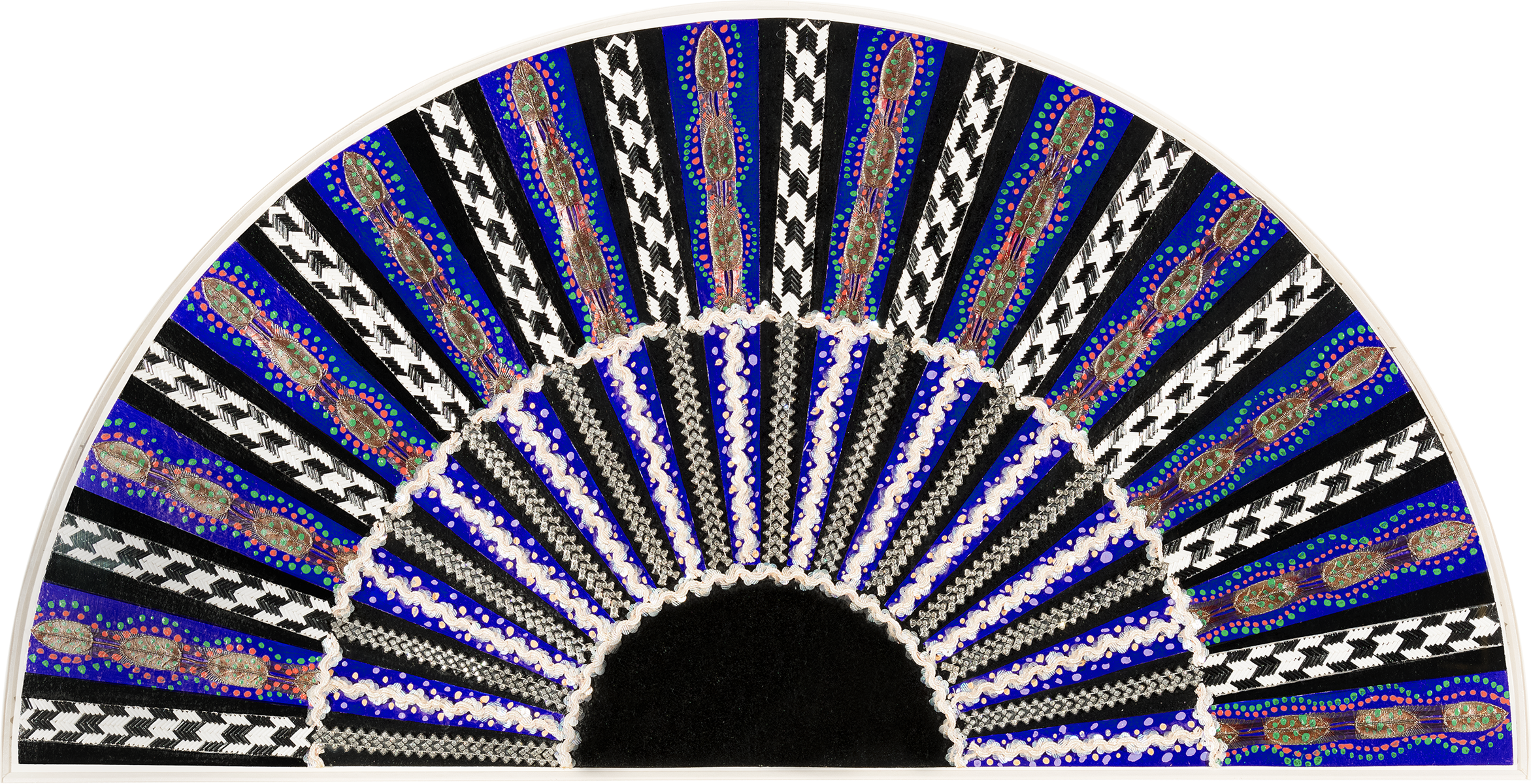
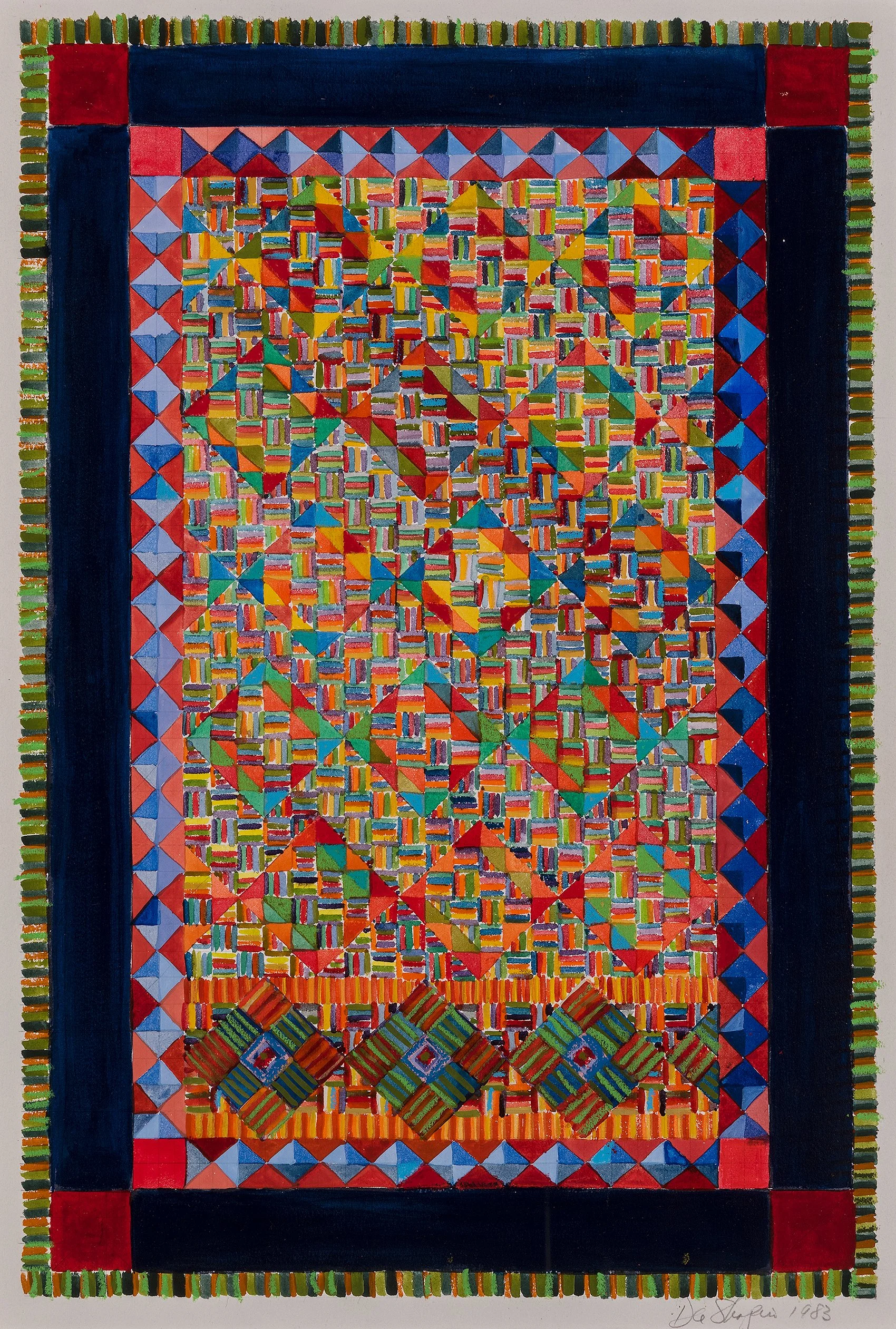
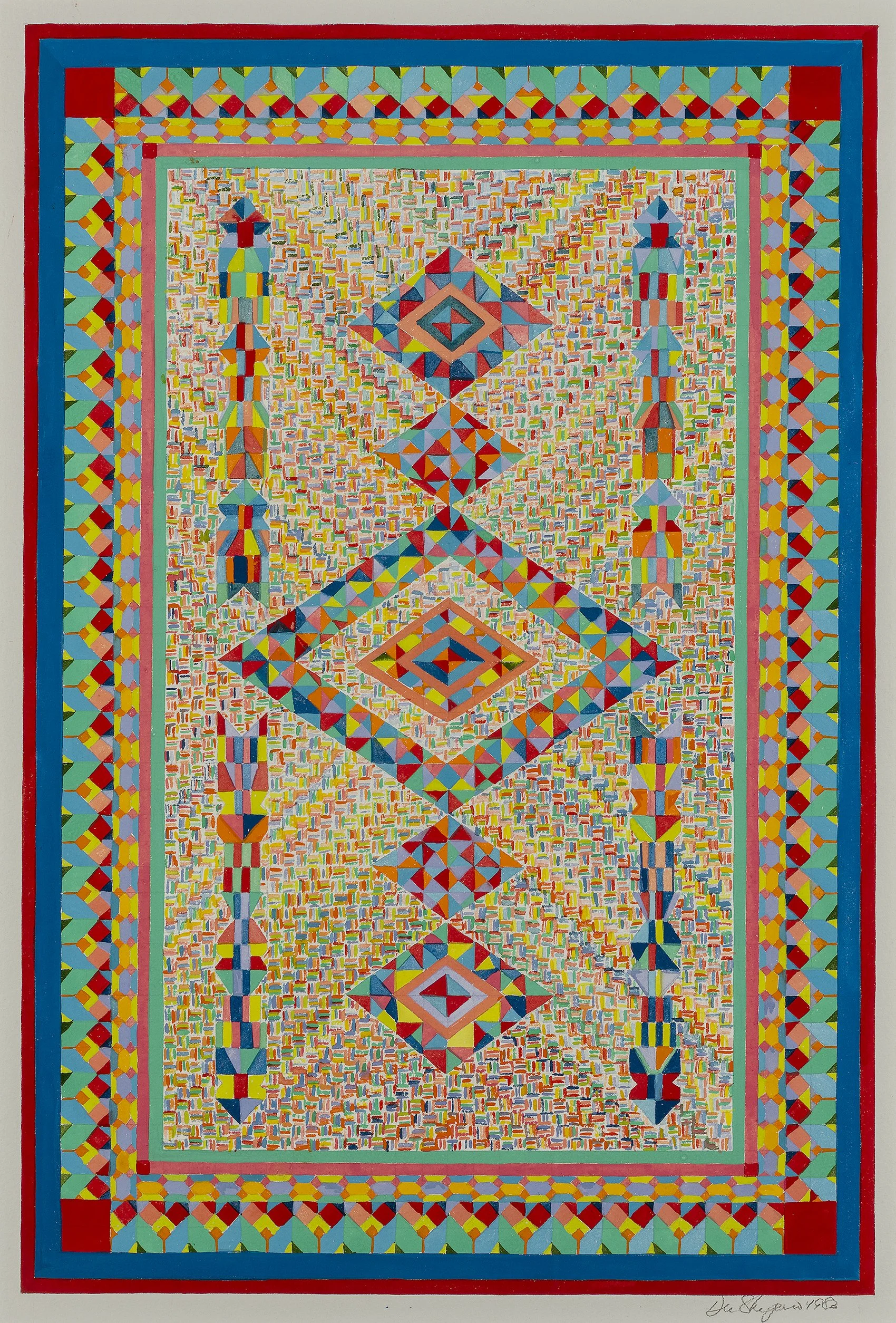
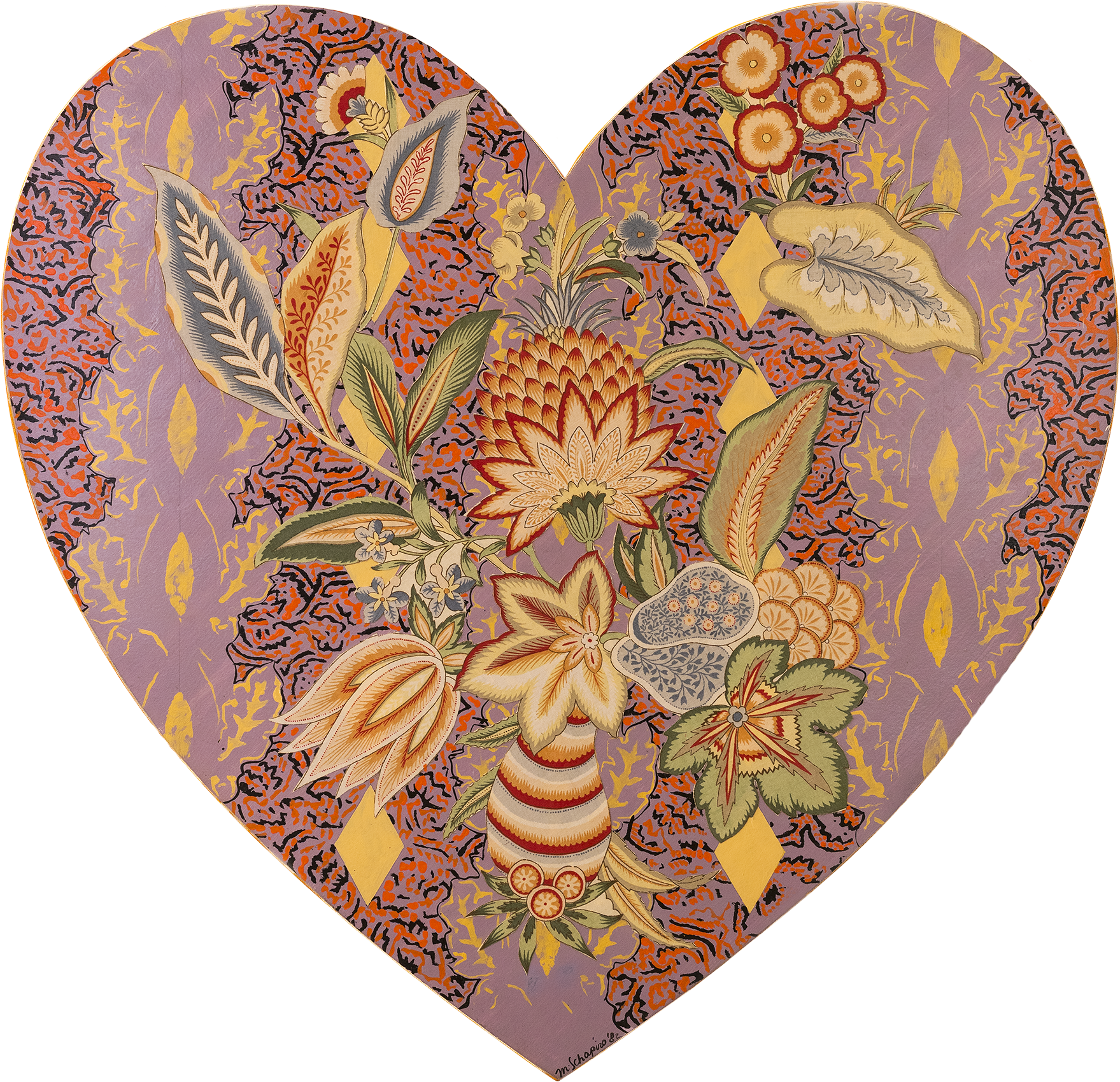
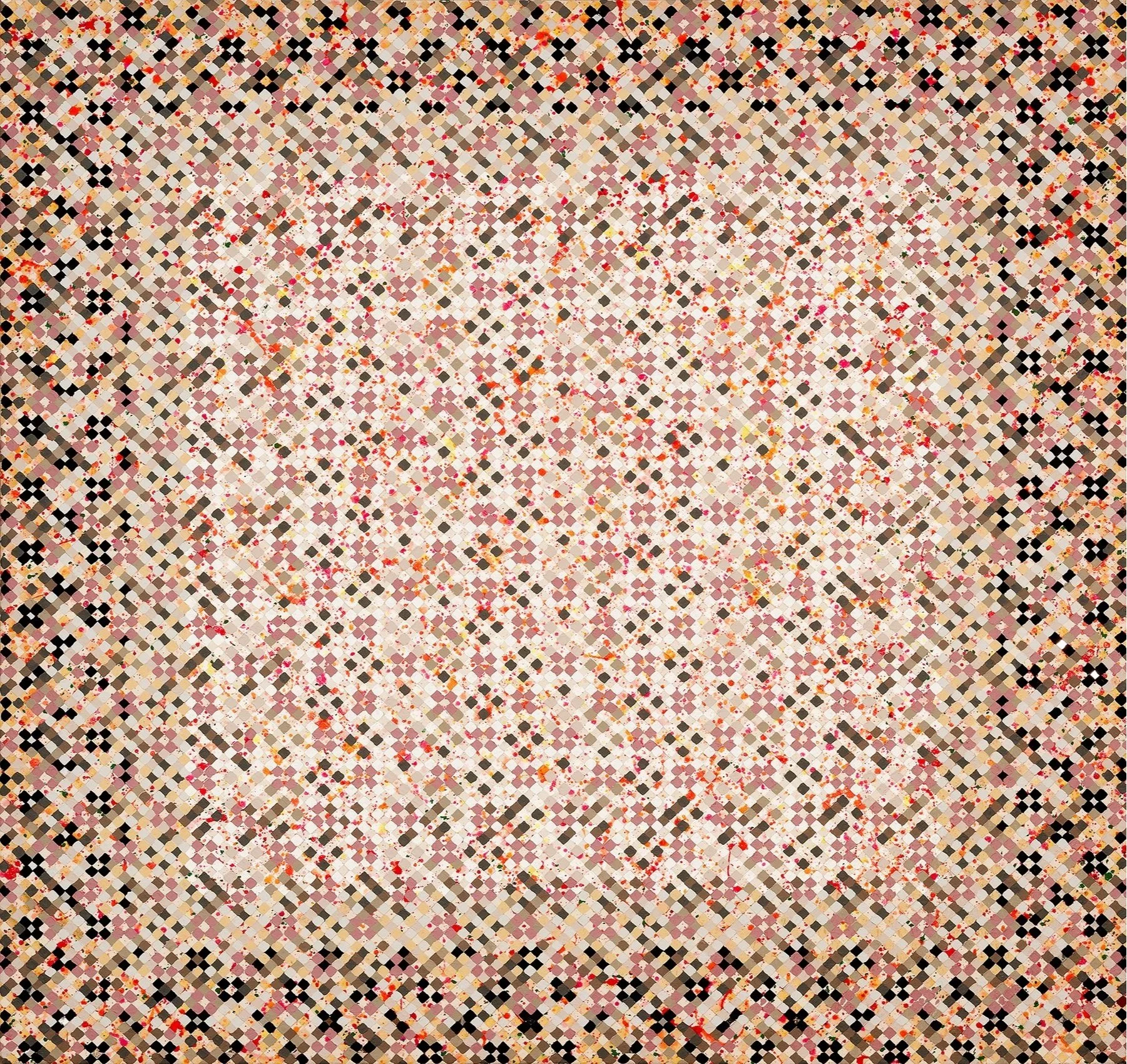
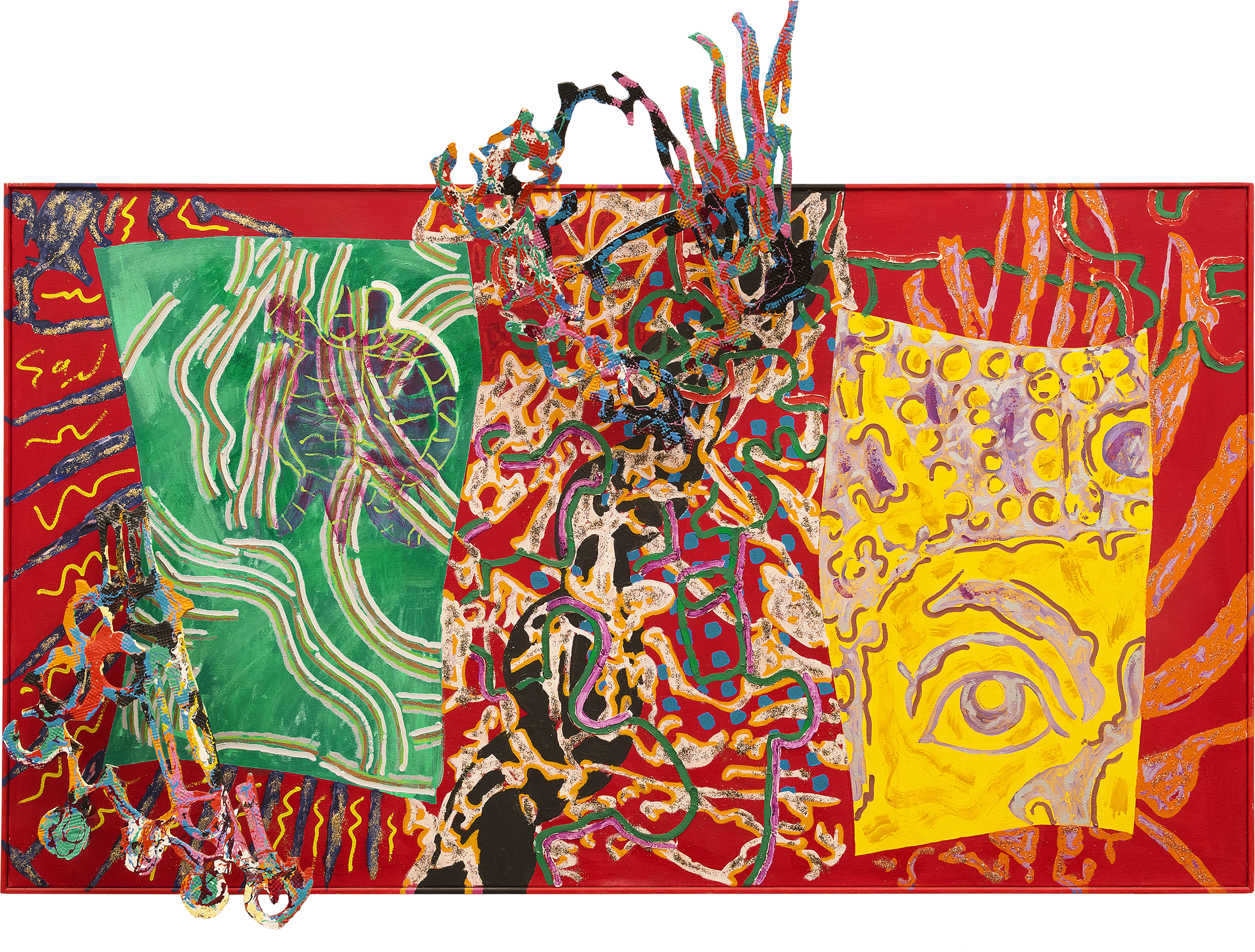
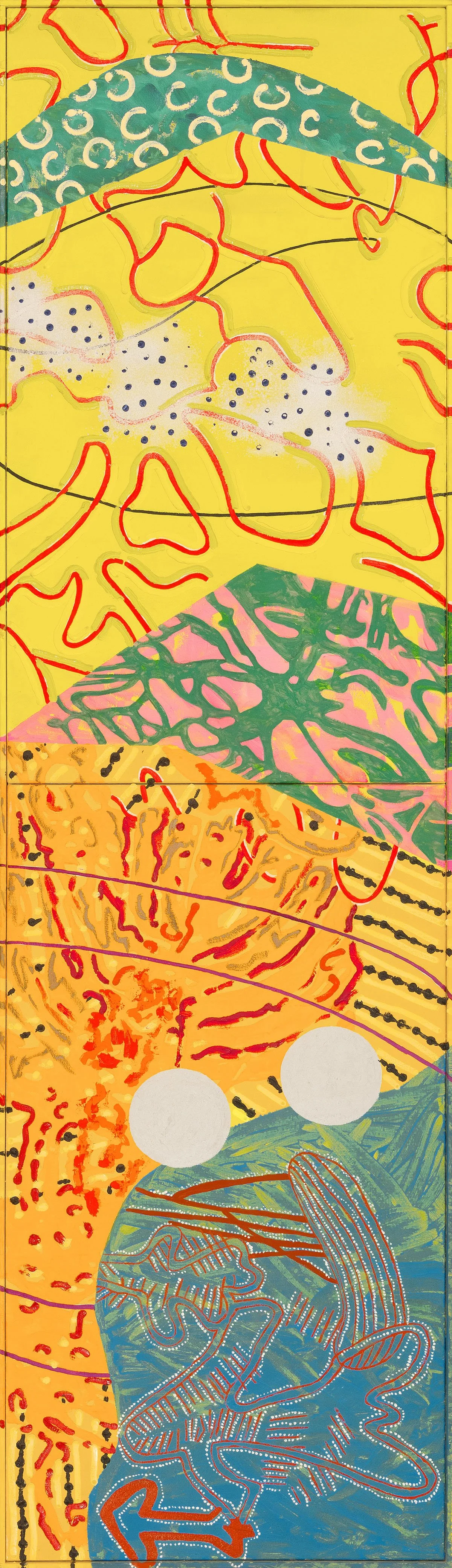
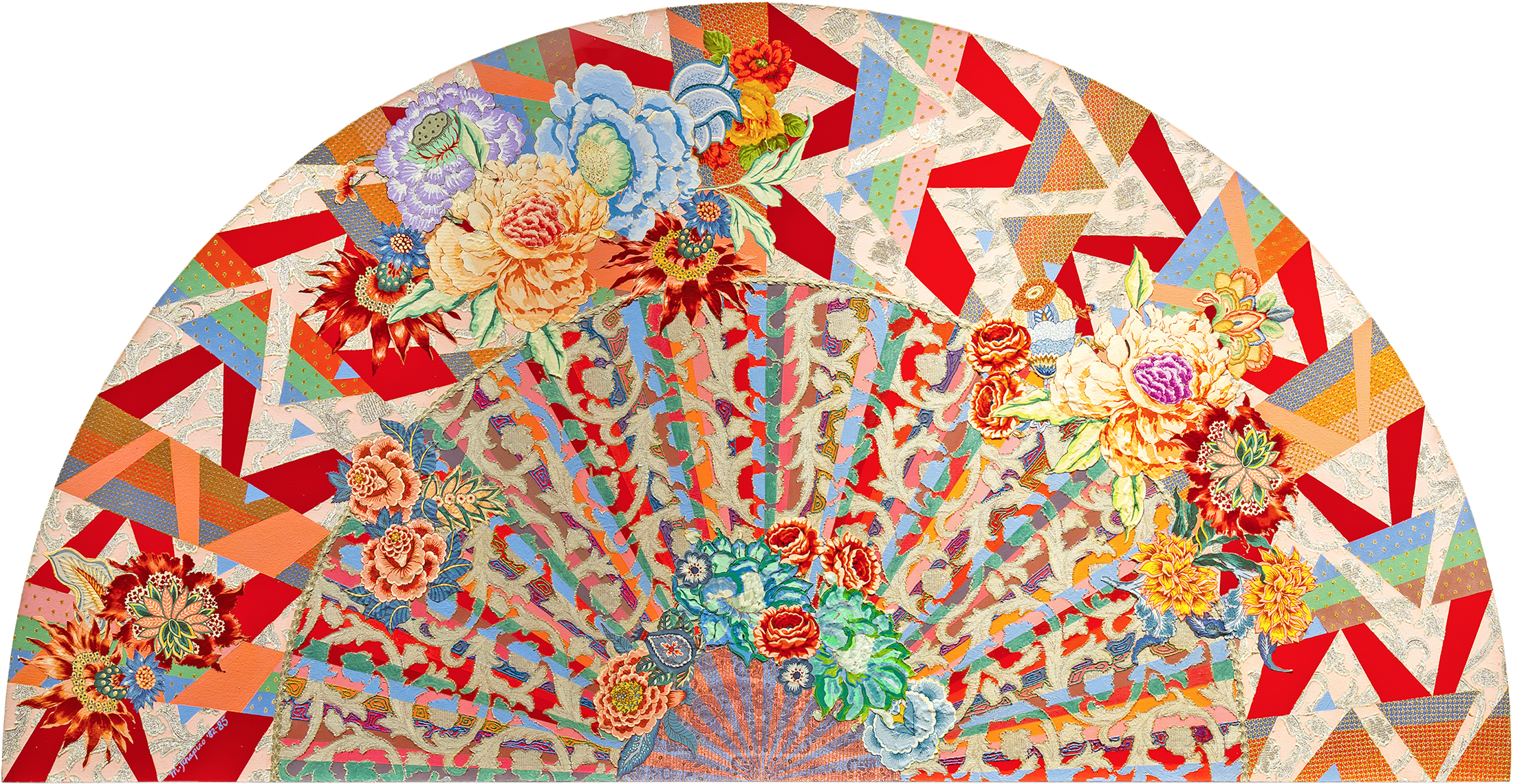
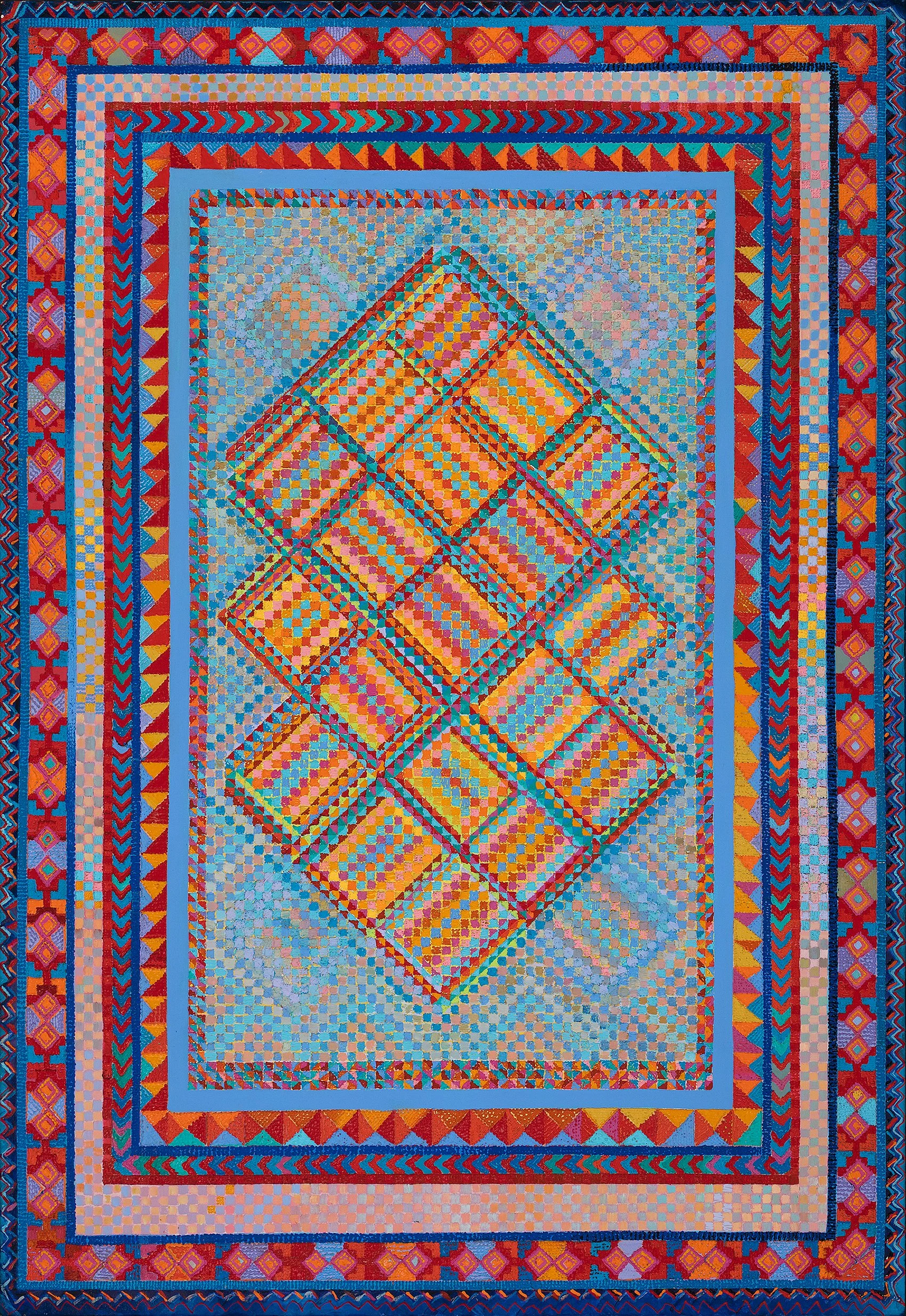
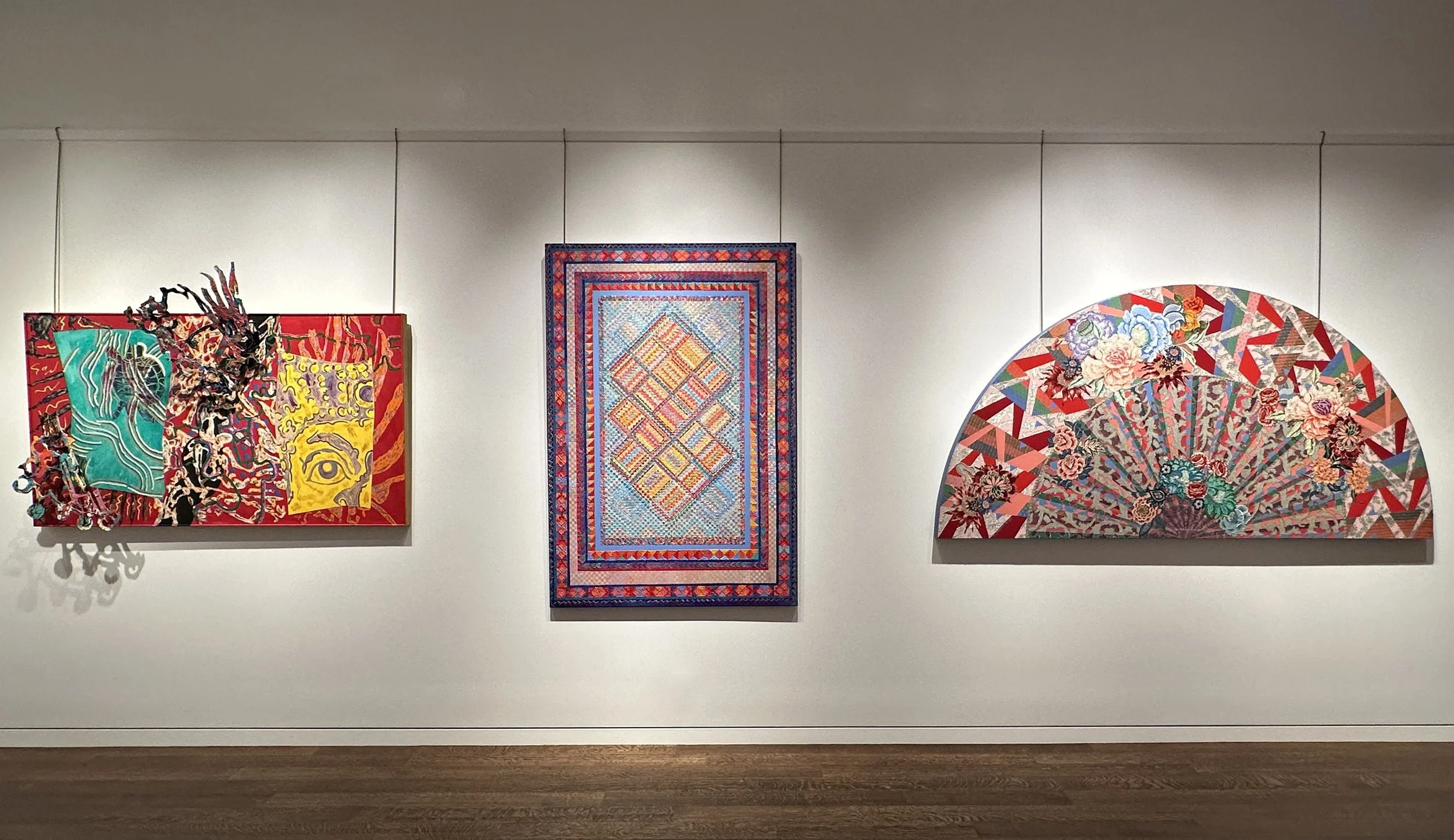
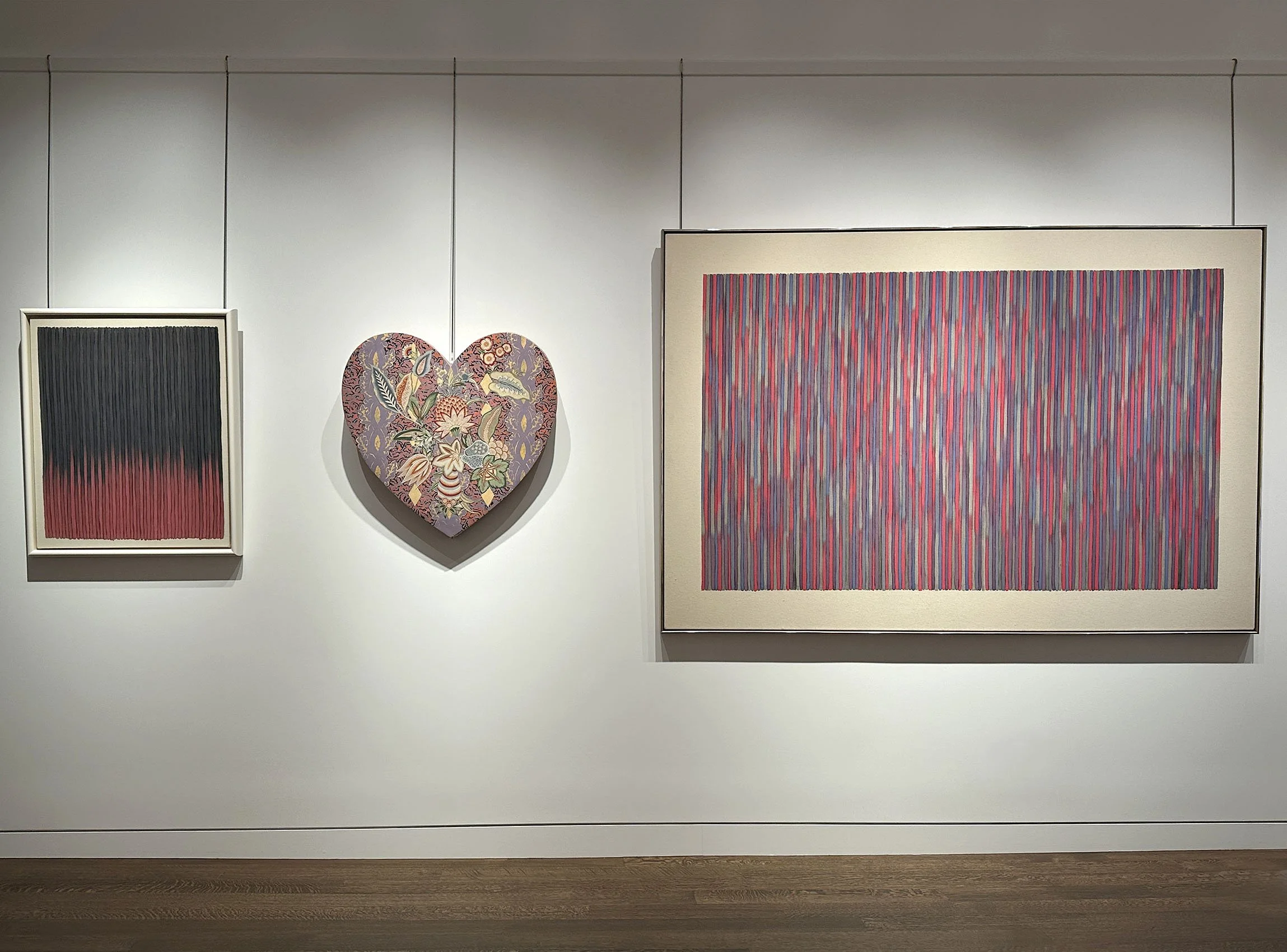
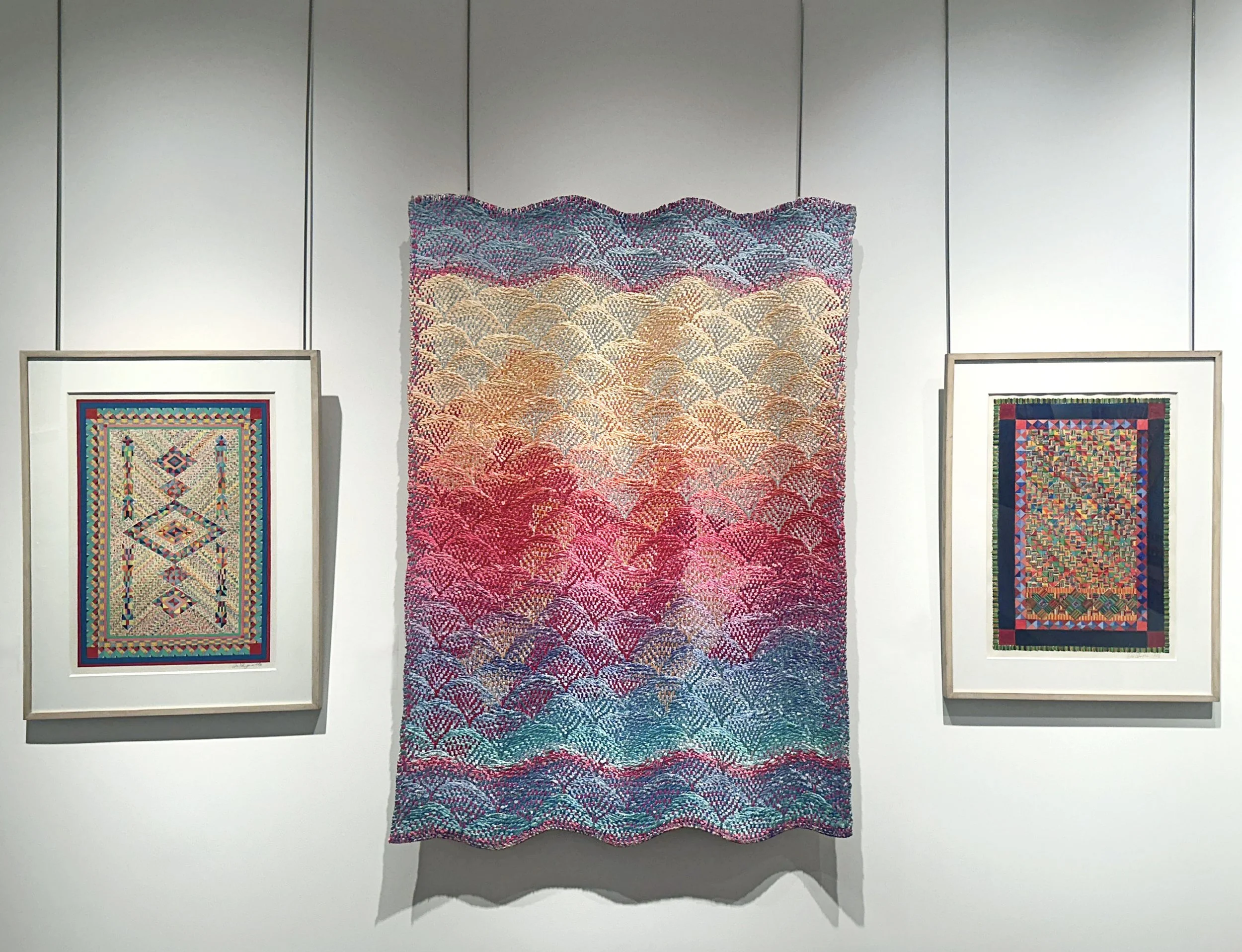
Miriam Schapiro’s femmages, which combined painting with floral fabrics, beading, and glitter, made the language of domestic craft inseparable from that of high modernist collage. Dee Shapiro used the colorful hatchmarks of her earlier Fibonacci series to create multi-bordered geometric compositions that resemble Persian rugs. Kendall Shaw merged bold abstraction with decorative motifs in Bayou Pom Pom, 1980-81 and Mochica, 1981. His distinct dabs of paint and embedded squares of mirror look like mosaics. In Mochica, Shaw finishes the large-scale painting with a velvet ribbon along the depth of the canvas edge. This adds to the reading of the painting as a craft object. Nancy Graves combines painting and sculpture in her Australia Series. In Dandenong (Australia Series), 1985, she adds painted aluminum sculptural elements to heighten the energetic lines snaking through the painting.
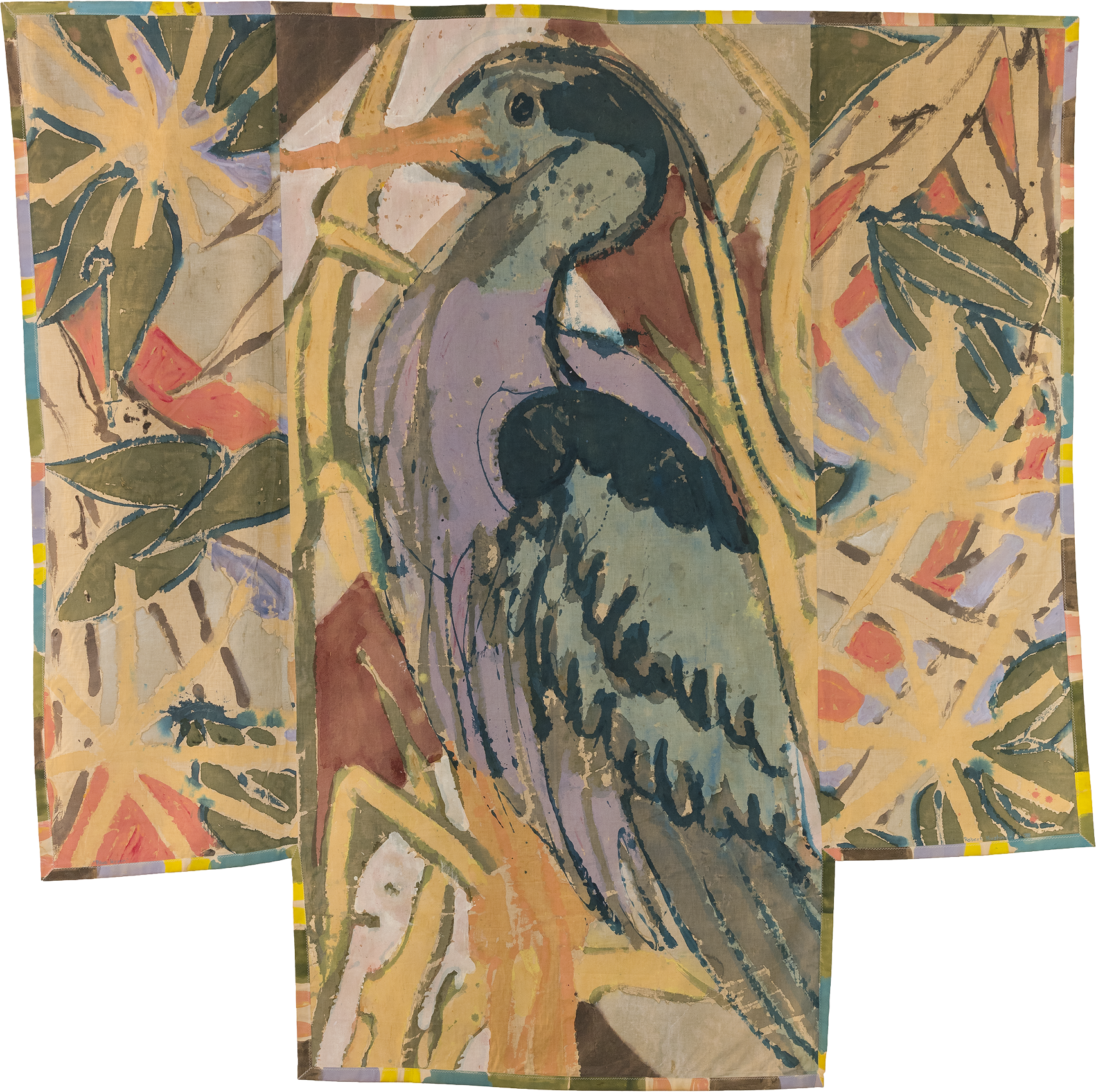
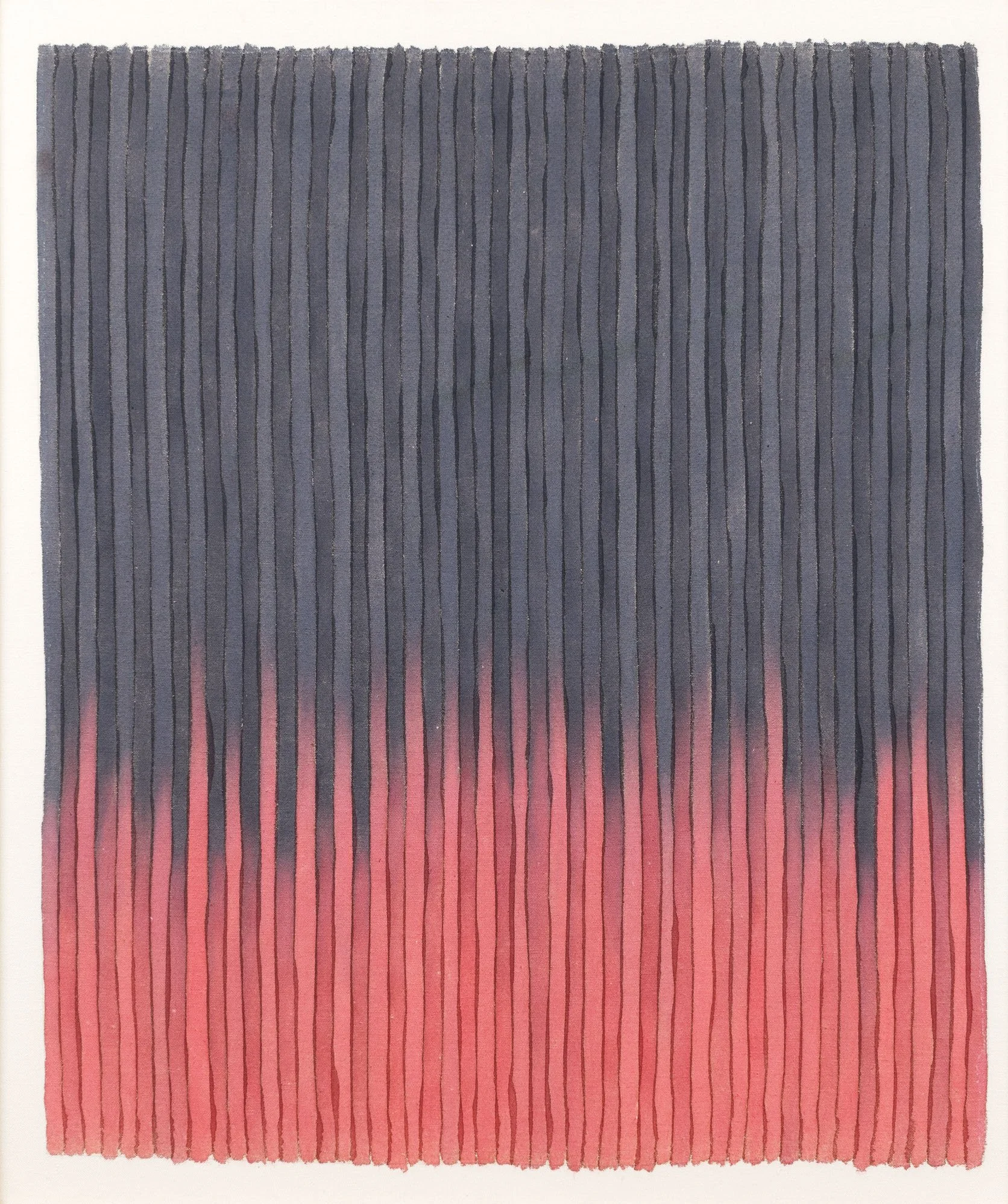
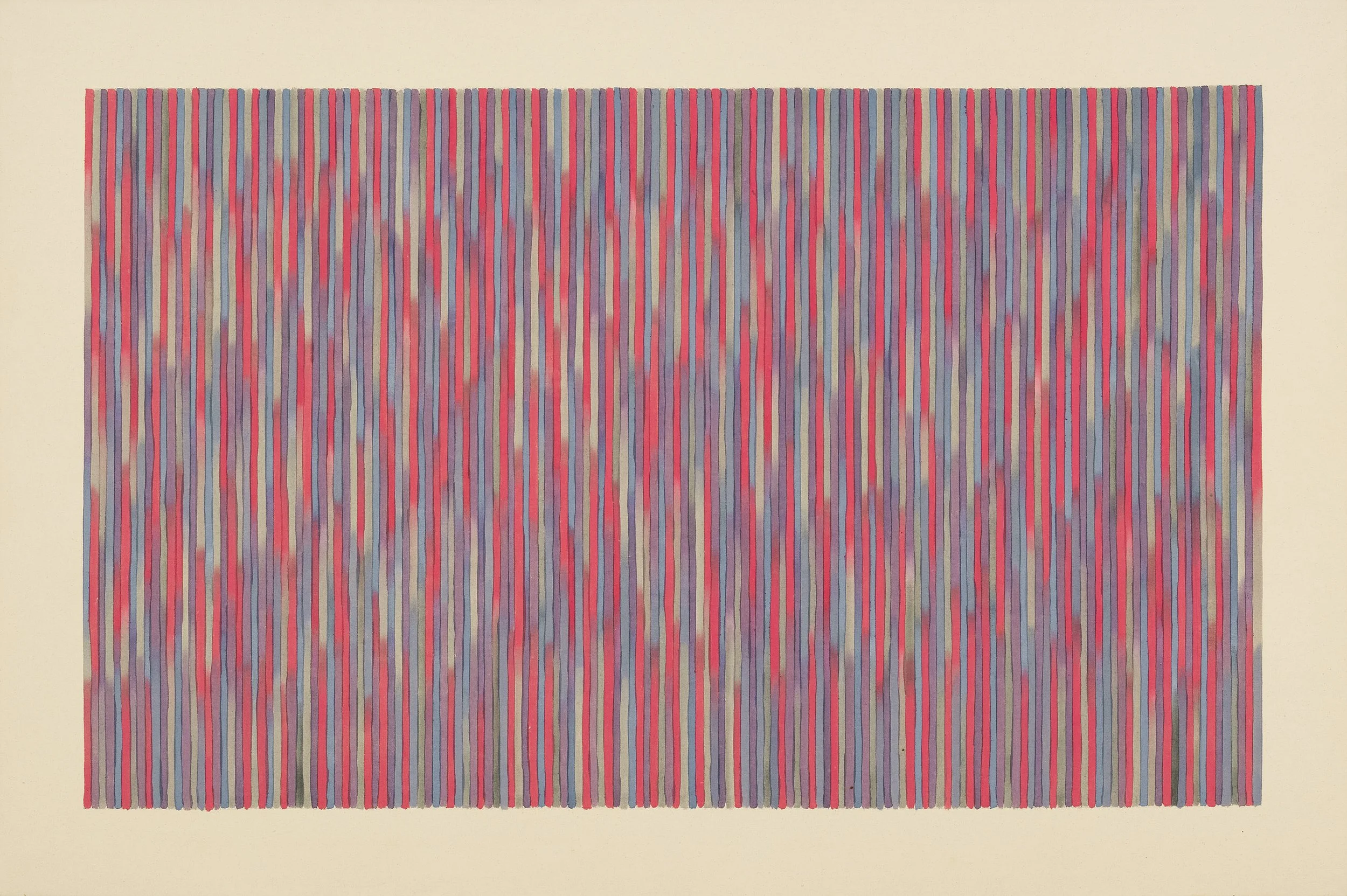
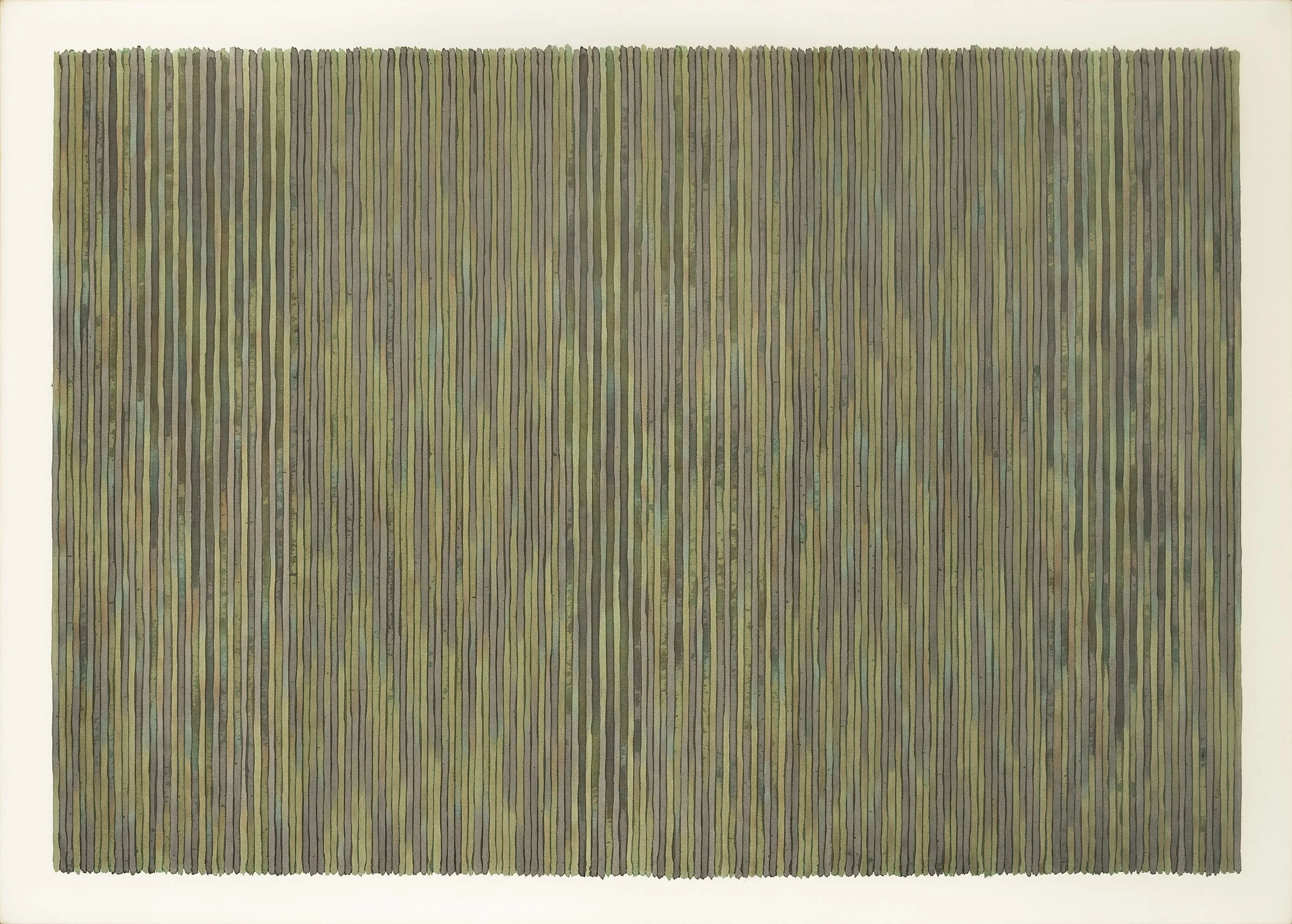
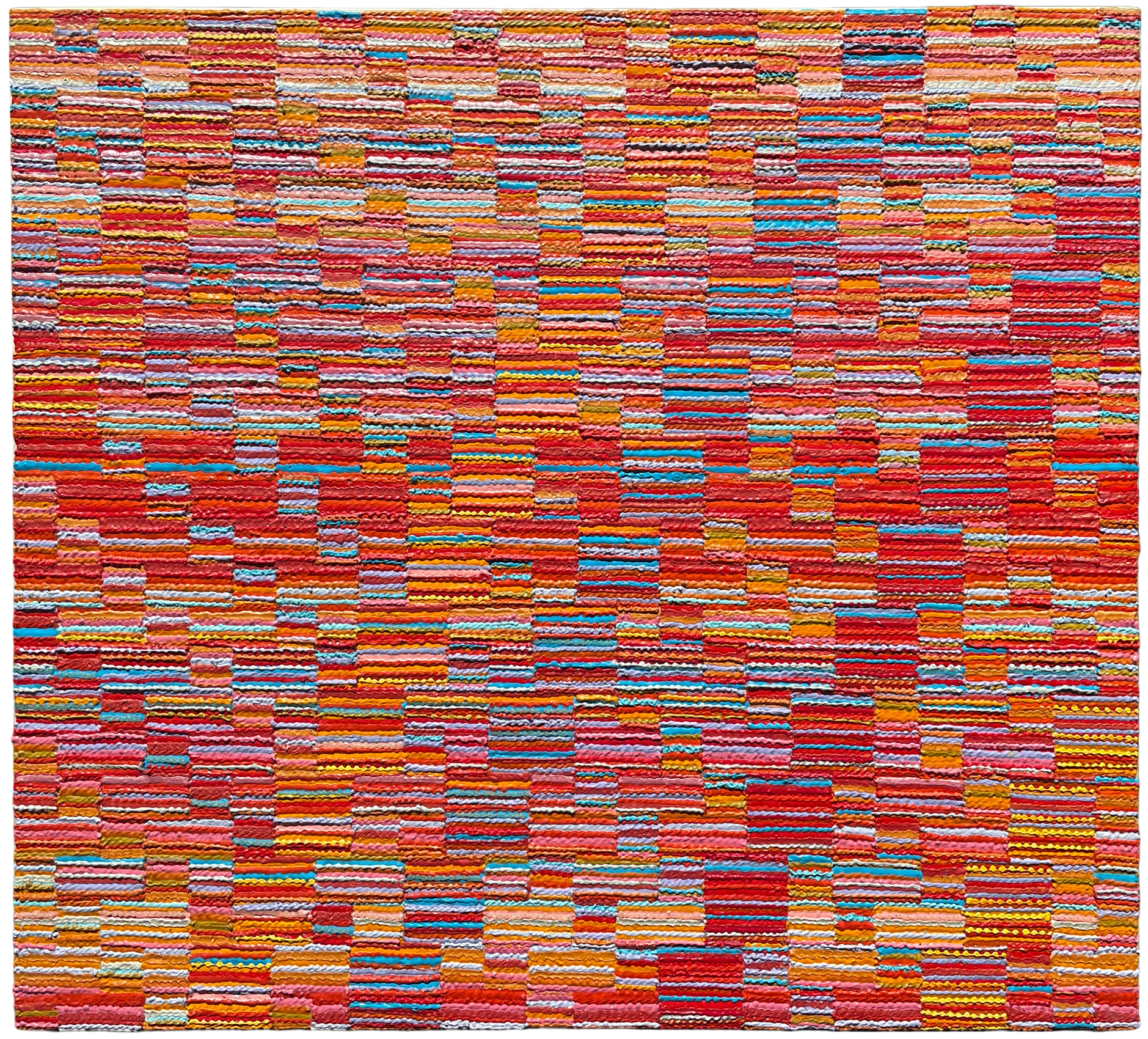
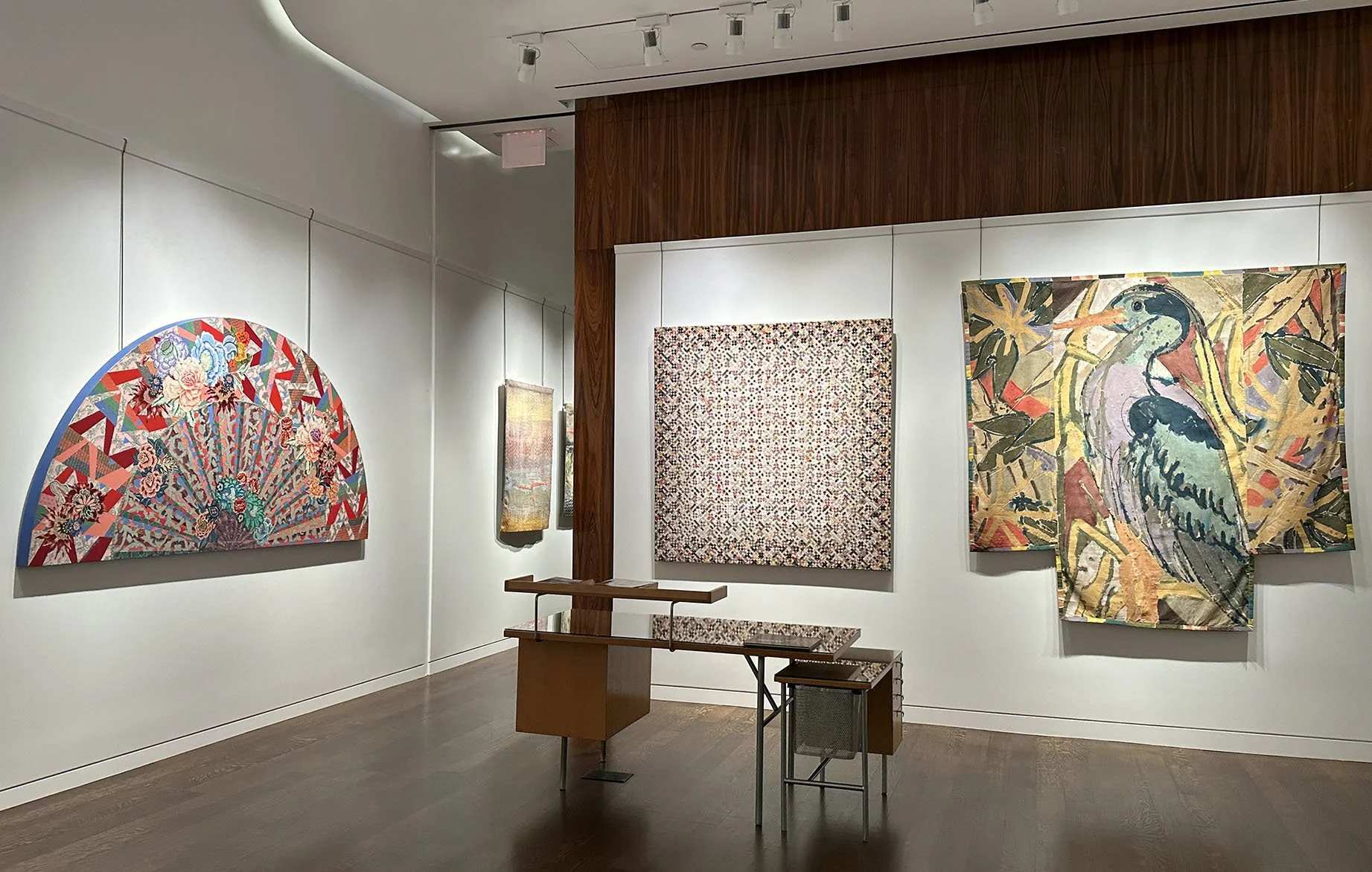
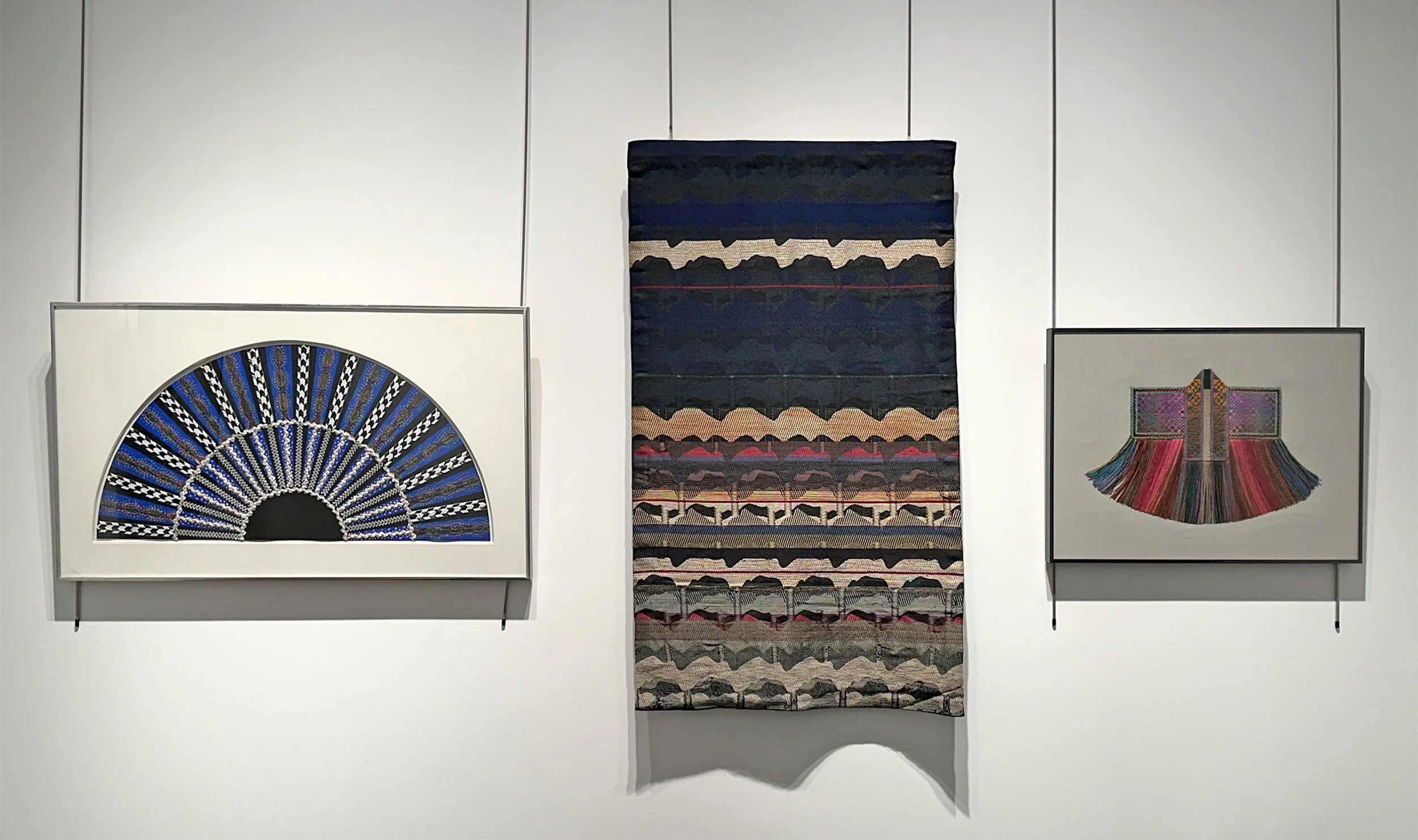
Robert Kushner painted robes to use in performances that he then hung on the wall, collapsing boundaries between painting and garment. The shape of Kushner’s Blue Heron, 1978 references the kimono with its long side panels (or sleeves) yet adheres to traditional painting as a single layer of canvas. The flatness in Kushner’s painting is achieved by staining directly into the canvas. This recalls Clement Greenberg’s writing regarding the 1960s Color School and their activation of the painting surface by leaving the raw canvas exposed. In a way, these 1960s artists were the first to draw attention to the intimate connection between painting and textile. For this reason, we include three 1980s paintings by Washington Color School artist Gene Davis (1920-1985) in our exhibition. These Davis works also show the broad reach of textiles in the 1980s as his loosely stained stripes of alternating colors suggest the in-and-out process of weaving canvas from thread.
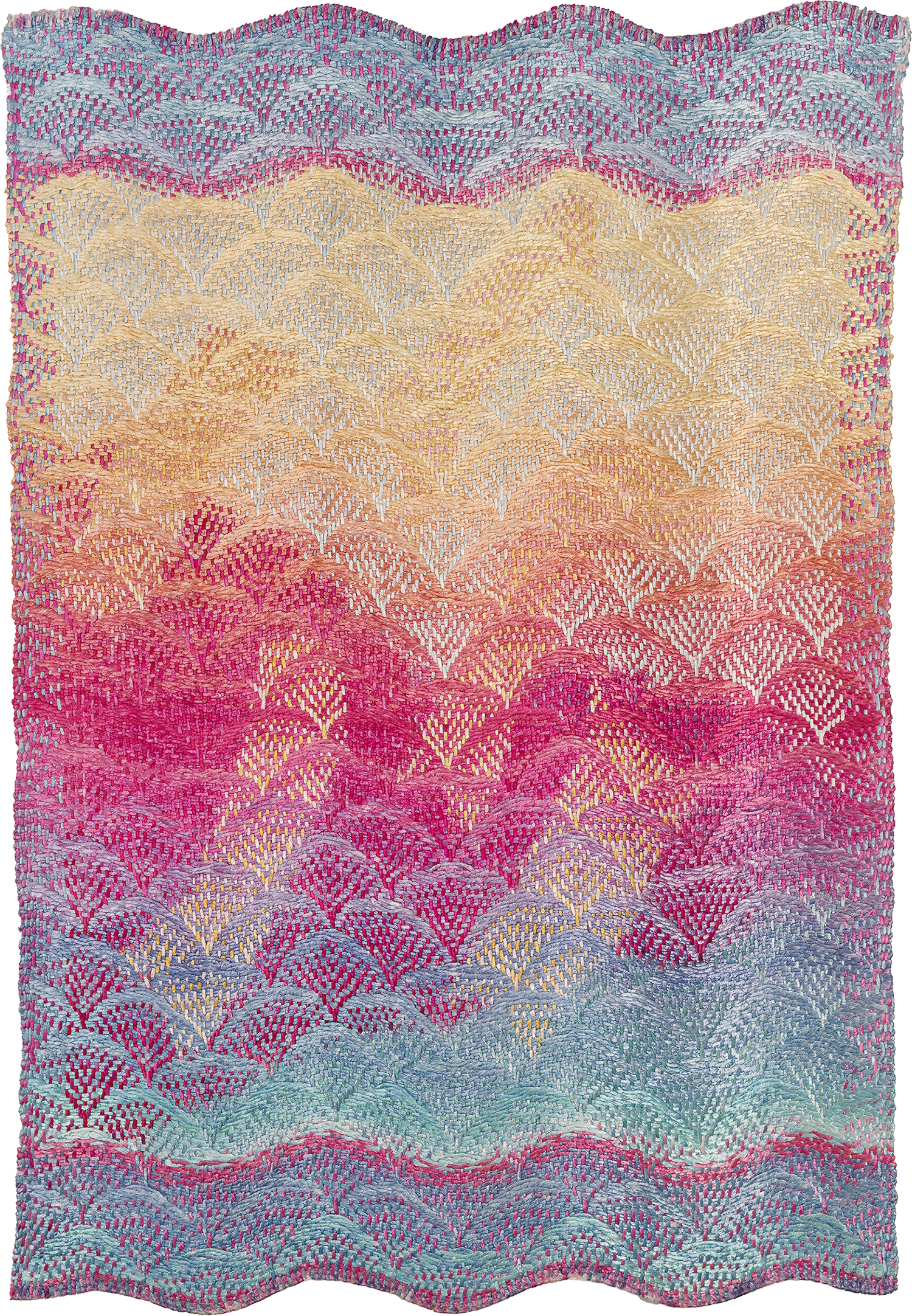
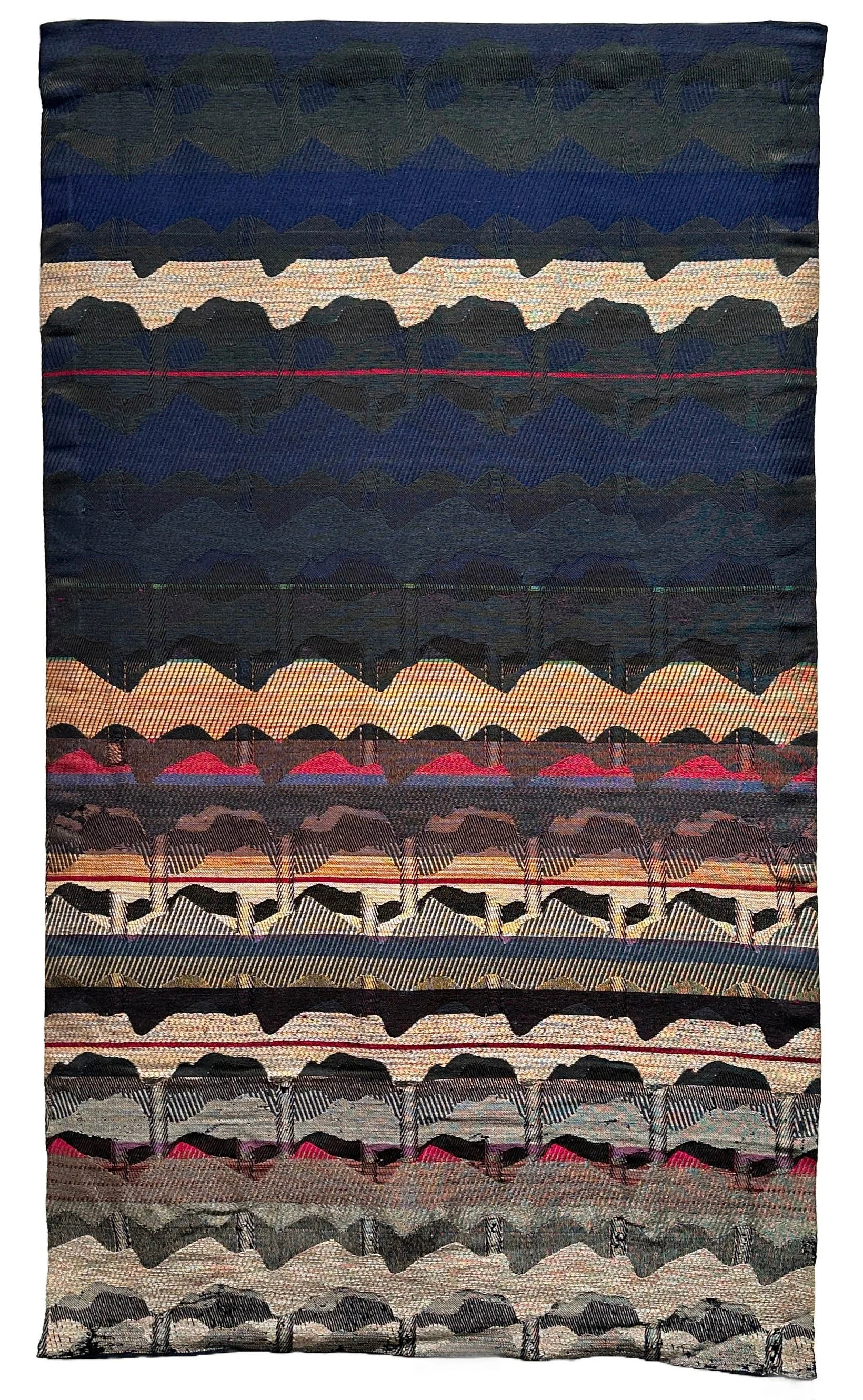
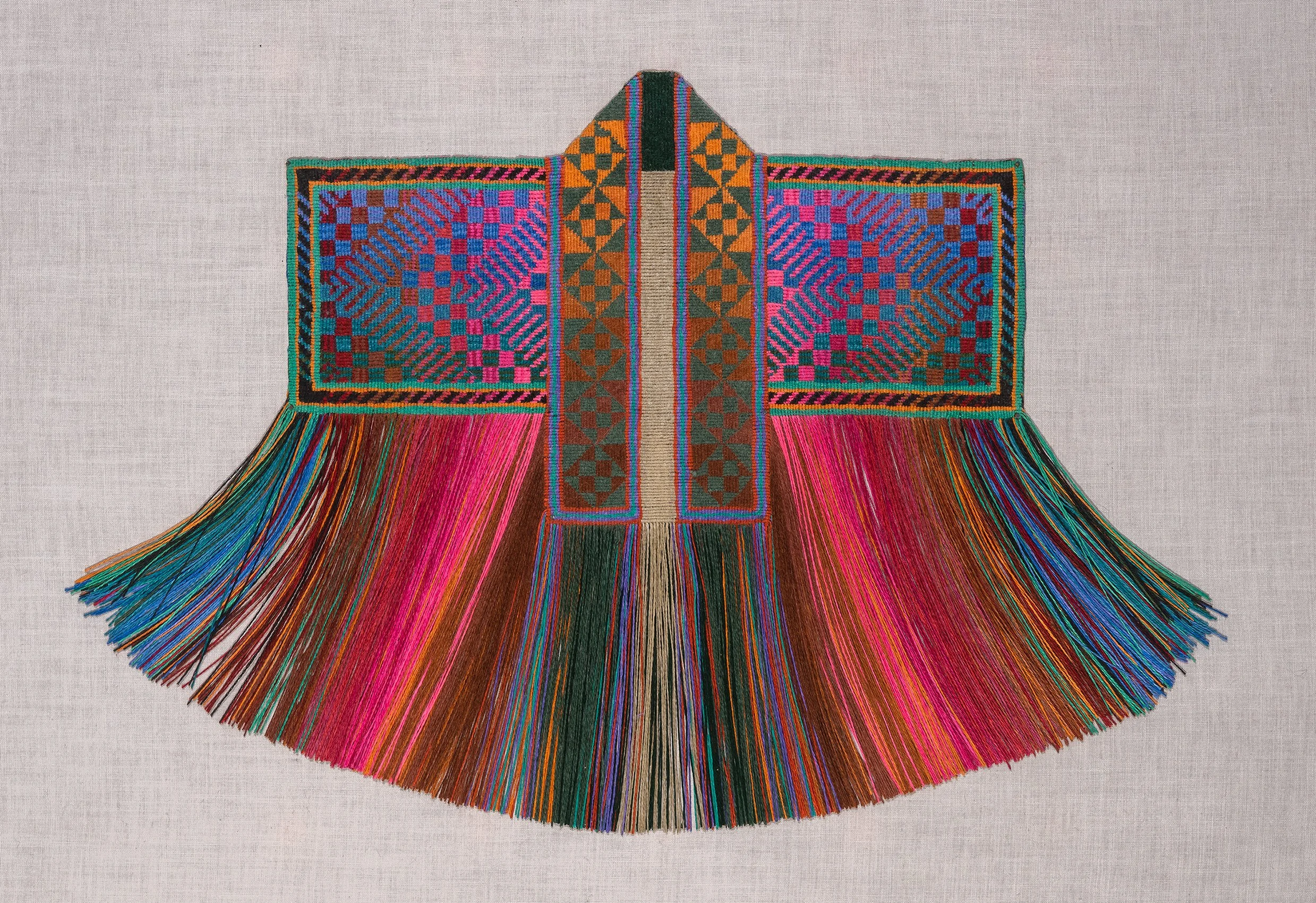
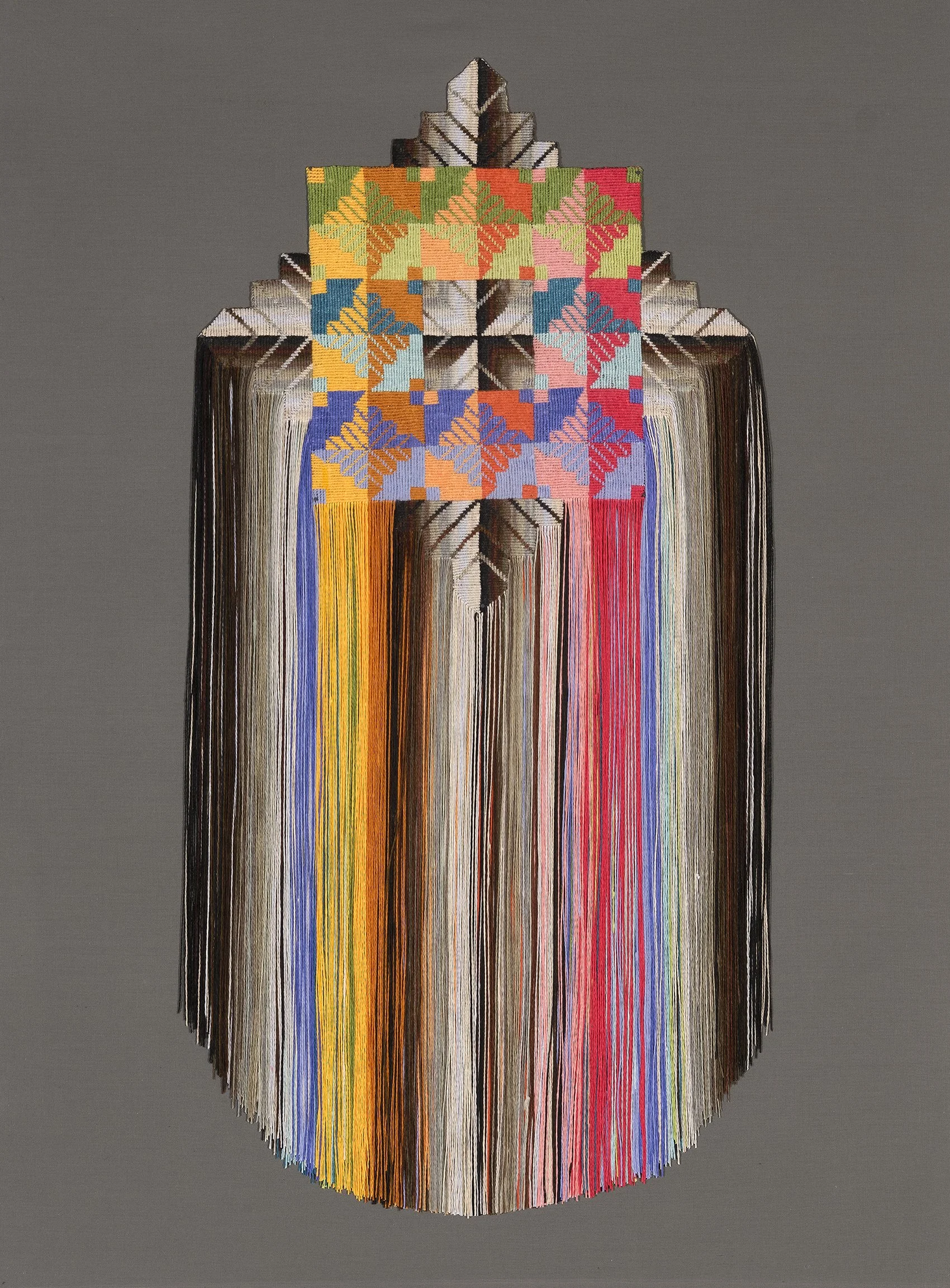
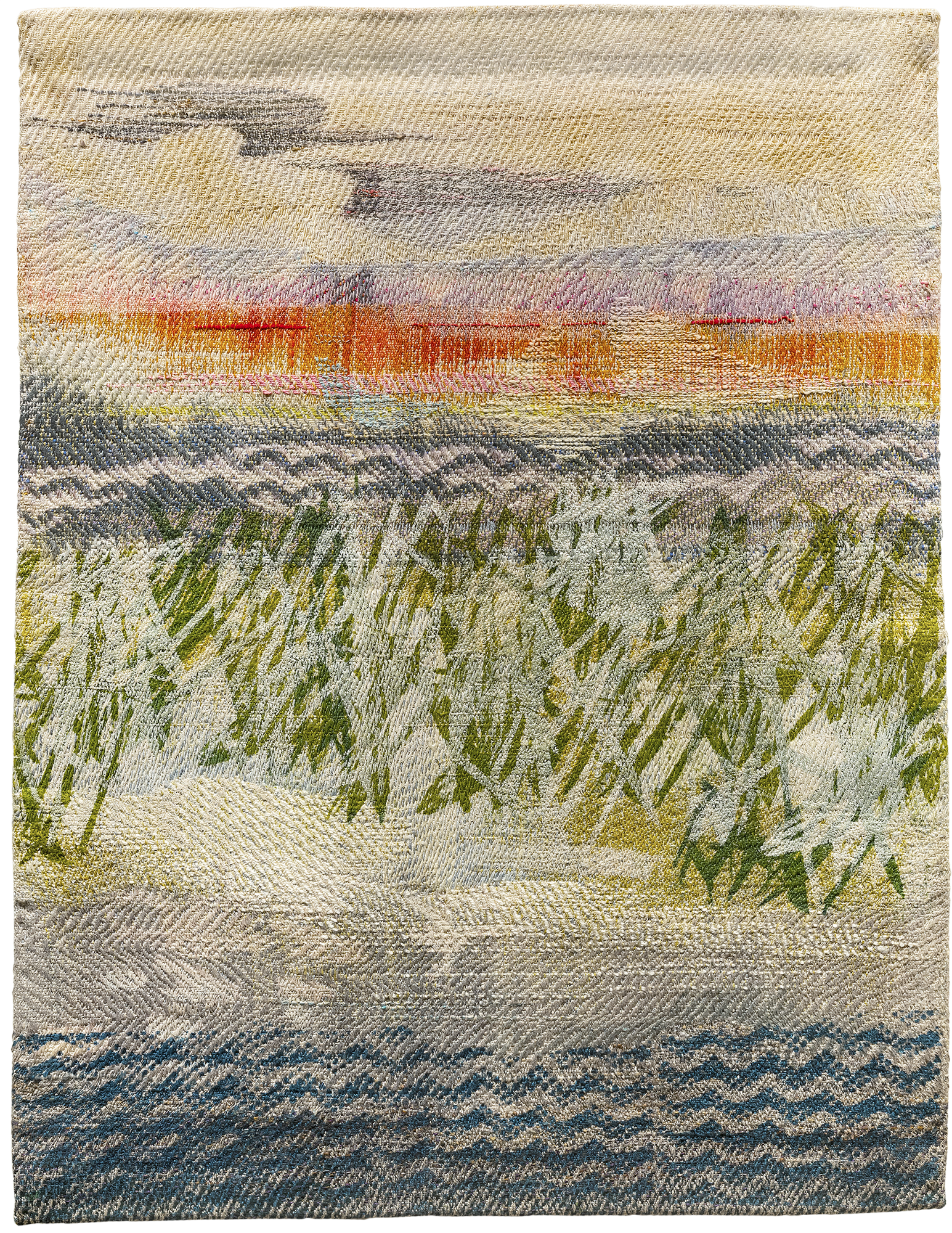
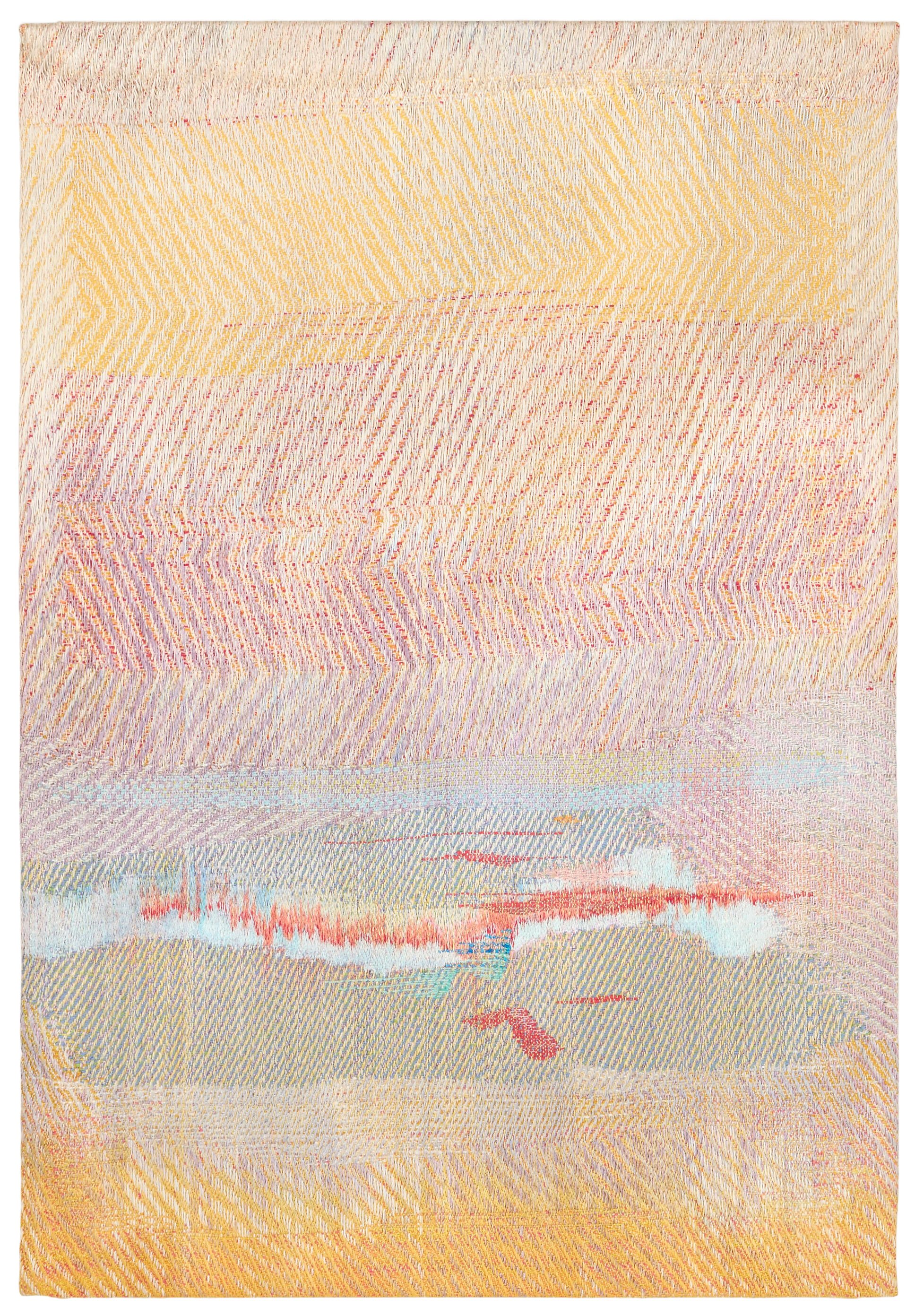
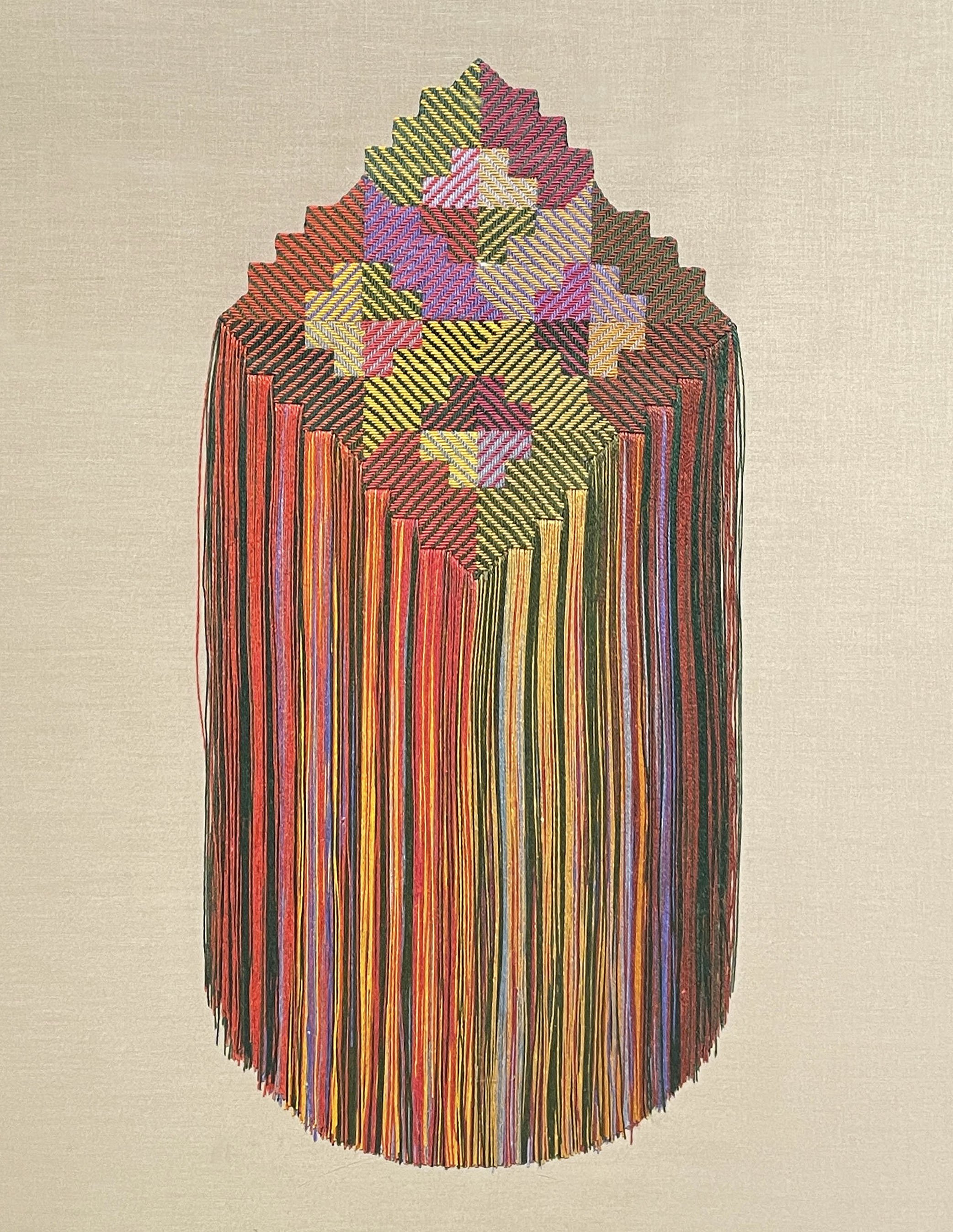
Three fiber artists in our exhibition used craft techniques in painterly ways while demonstrating the underlying patterning of weaving. Diane Itter, working with intricate knotted threads, incorporated patterns from across the world into her gem-like works. Itter mounted and framed her weavings to emphasize their pictorial presence rather than her craft technique. Cynthia Schira (b. 1934) used an early computerized loom to expand the complexity of her compositions while allowing her to develop the imagery throughout the process like a painter. Lia Cook (b. 1942) integrated loom-based traditions with new materials (rayon) and techniques; she flattened her weavings in an etching press to enhance their pictorial quality. Her piece in our exhibition Through the Curtain and Up from the Sea (1985) was included in the 2019-2021 exhibition With Pleasure: Pattern and Decoration in American Art, 1972–1985 at the Museum of Contemporary Art, Los Angeles and the Hessel Museum of Art at Bard College.
Starting in the late 1970s, the Pattern and Decoration movement was institutionally recognized, critically received, and commercially successful. The movement was seen as a radical redefinition of what modern art could look like and which histories and techniques it could honor. In recent years the Pattern & Decoration movement has undergone a reevaluation in museum exhibitions in the US and Europe including Surface/Depth: The Decorative after Miriam Schapiro at the Museum of Art and Design, New York, 2018; Pattern and Decoration: Ornament as Promise at Mumok (Museum of Modern Art), Vienna, 2019; and With Pleasure: Pattern and Decoration in American Art, 1972–1985 at MOCA, Los Angeles and Hessel Museum of Art from 2019-2021. The first reappraisal Pattern and Decoration: An Ideal Vision in American Art was curated by Anne Swartz at the Hudson River Museum in 2007. In today’s art we see the movement's embrace of cross-cultural sources, its dismantling of the hierarchy between fine art and craft, and its celebration of beauty.