Sept 6 - Nov 15, 2011
Some works may still be available, please contact the gallery at 212-581-1657.
AMERICAN TOBACCO COMPANY
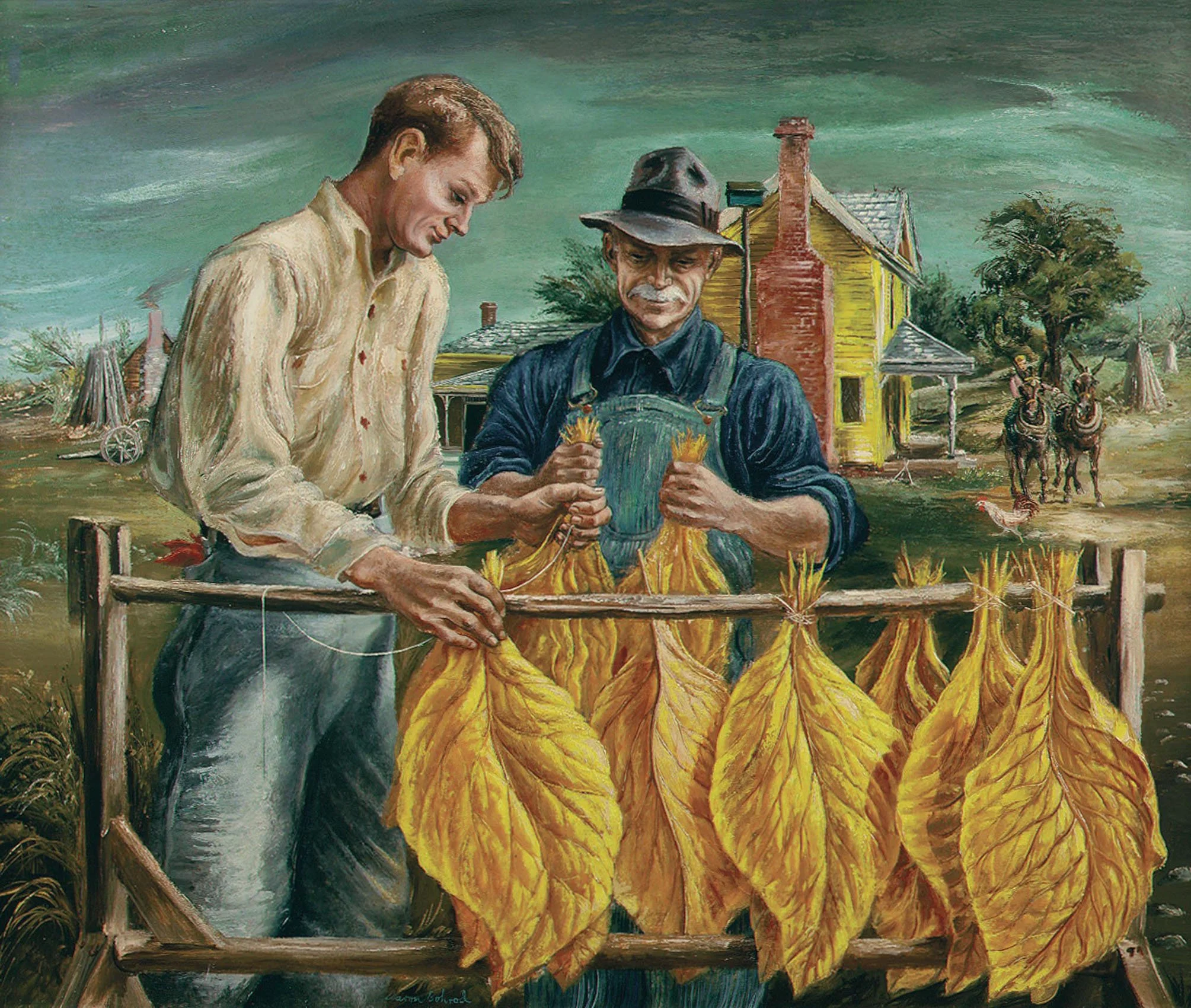
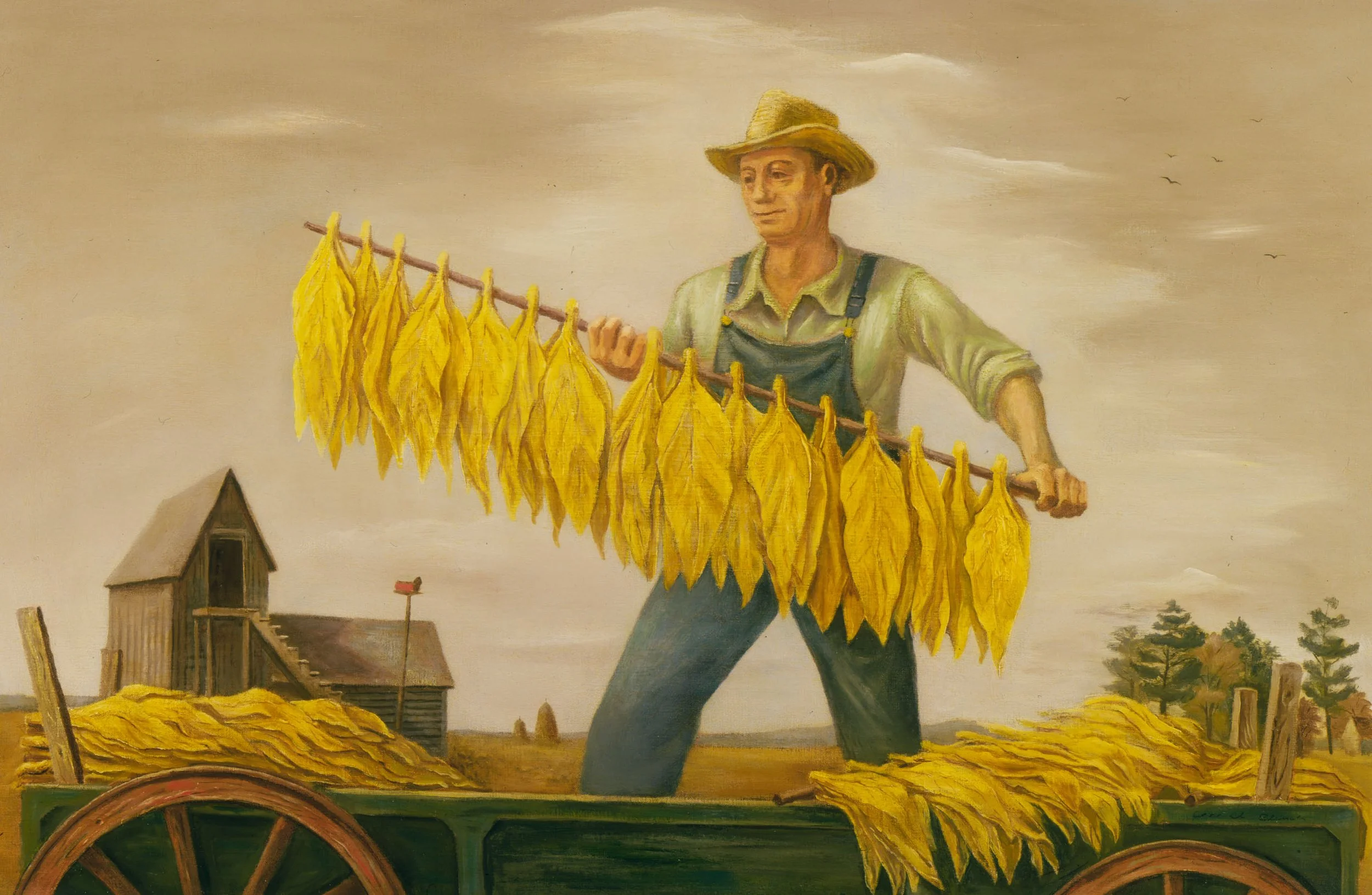
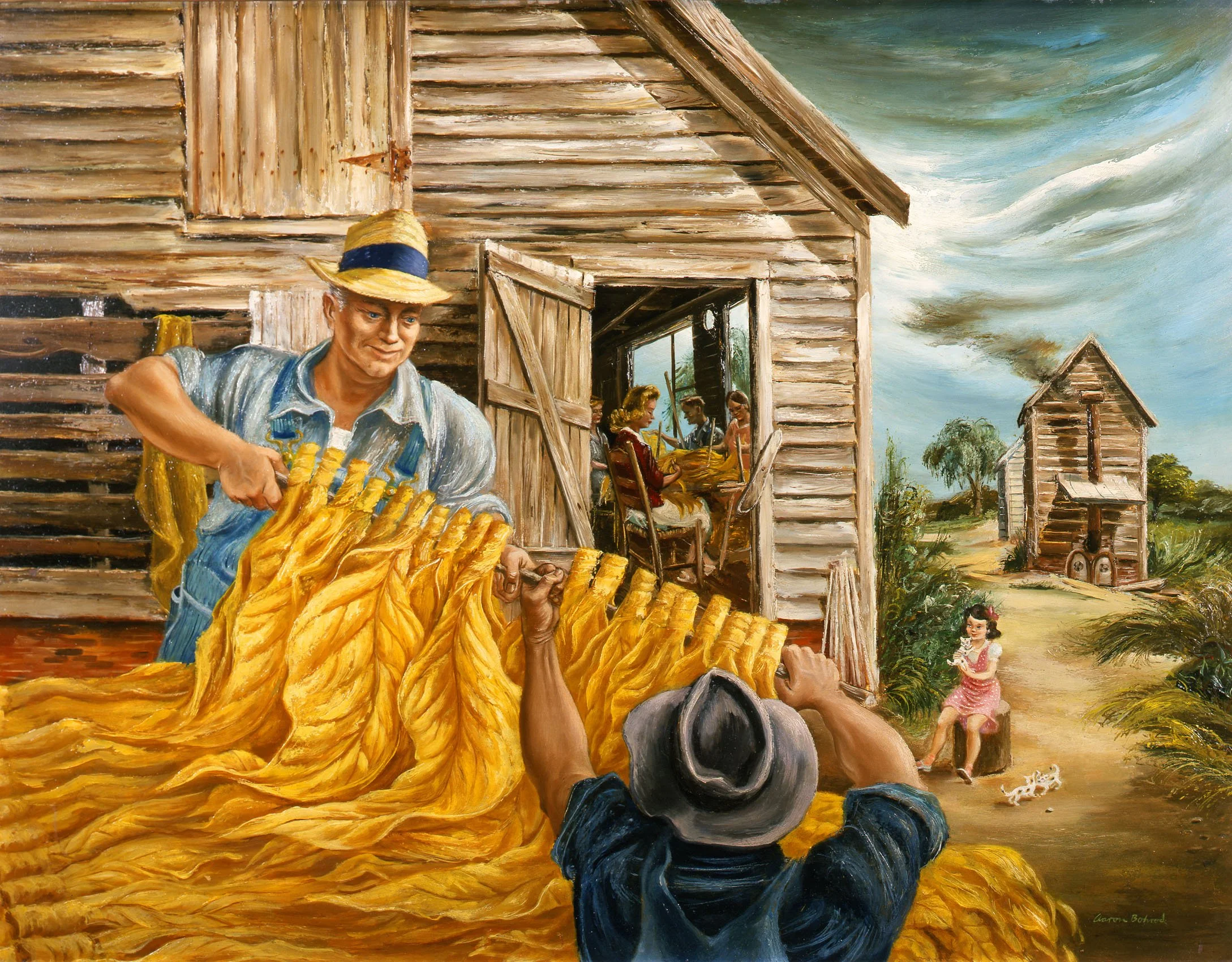
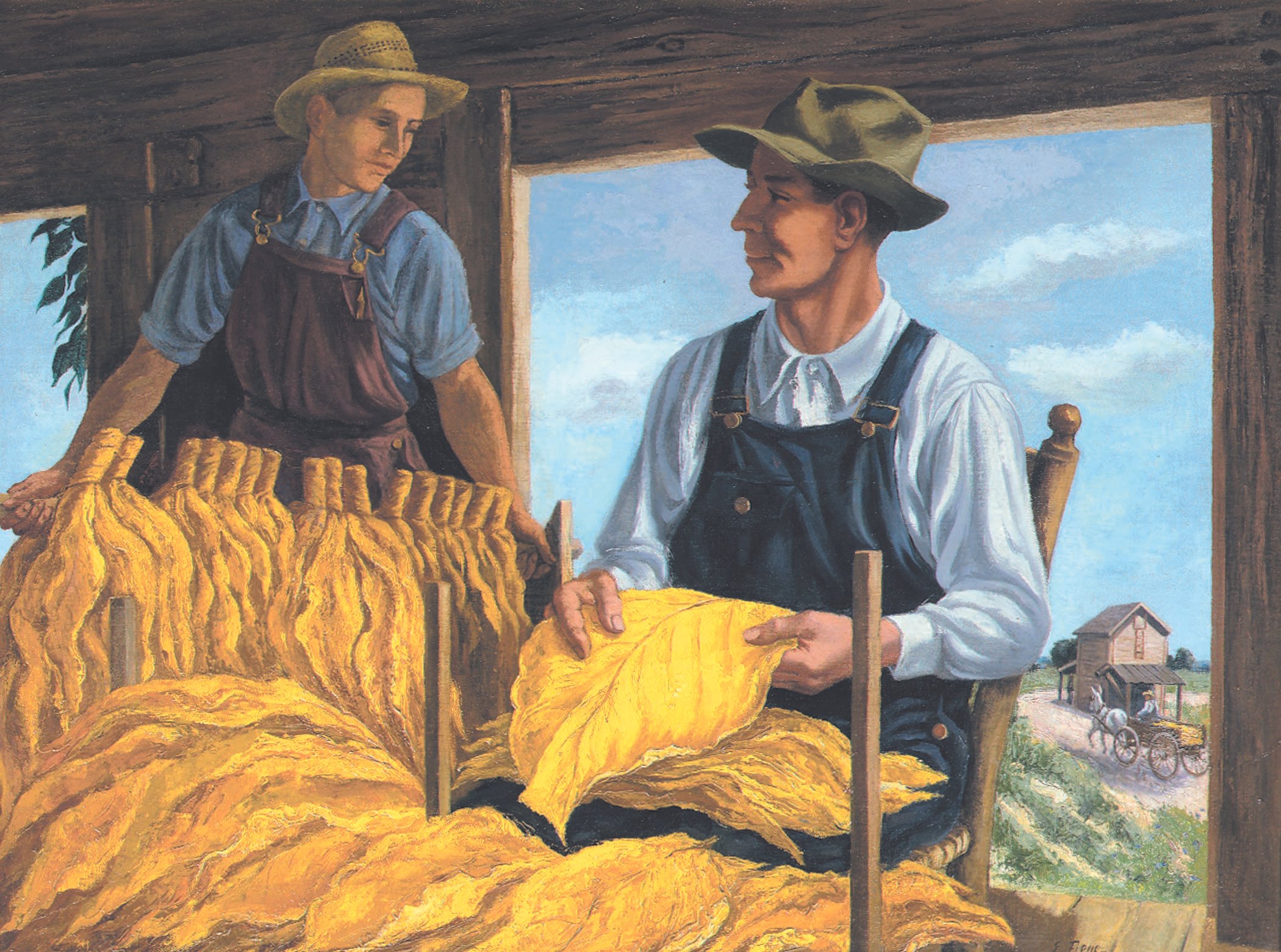
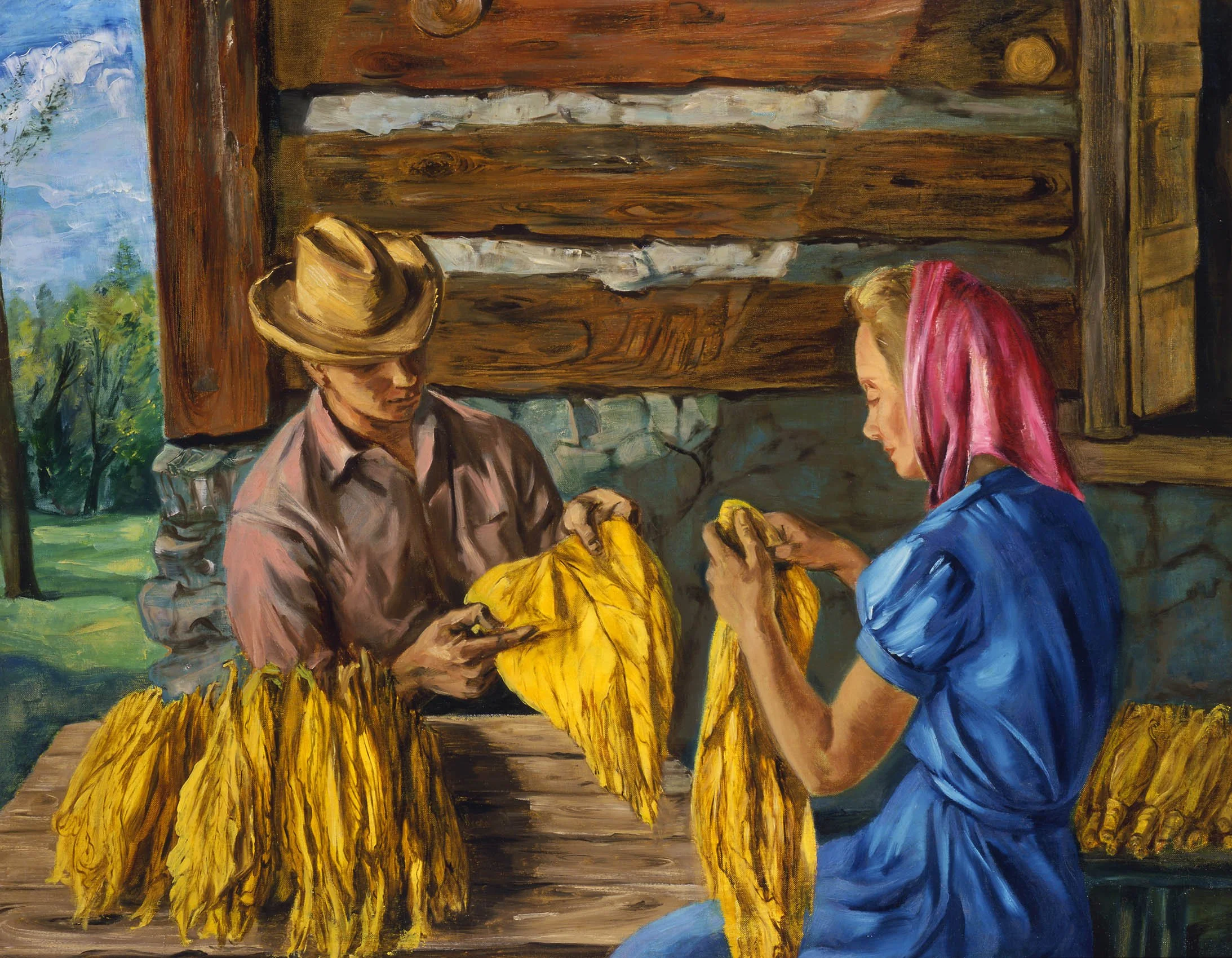
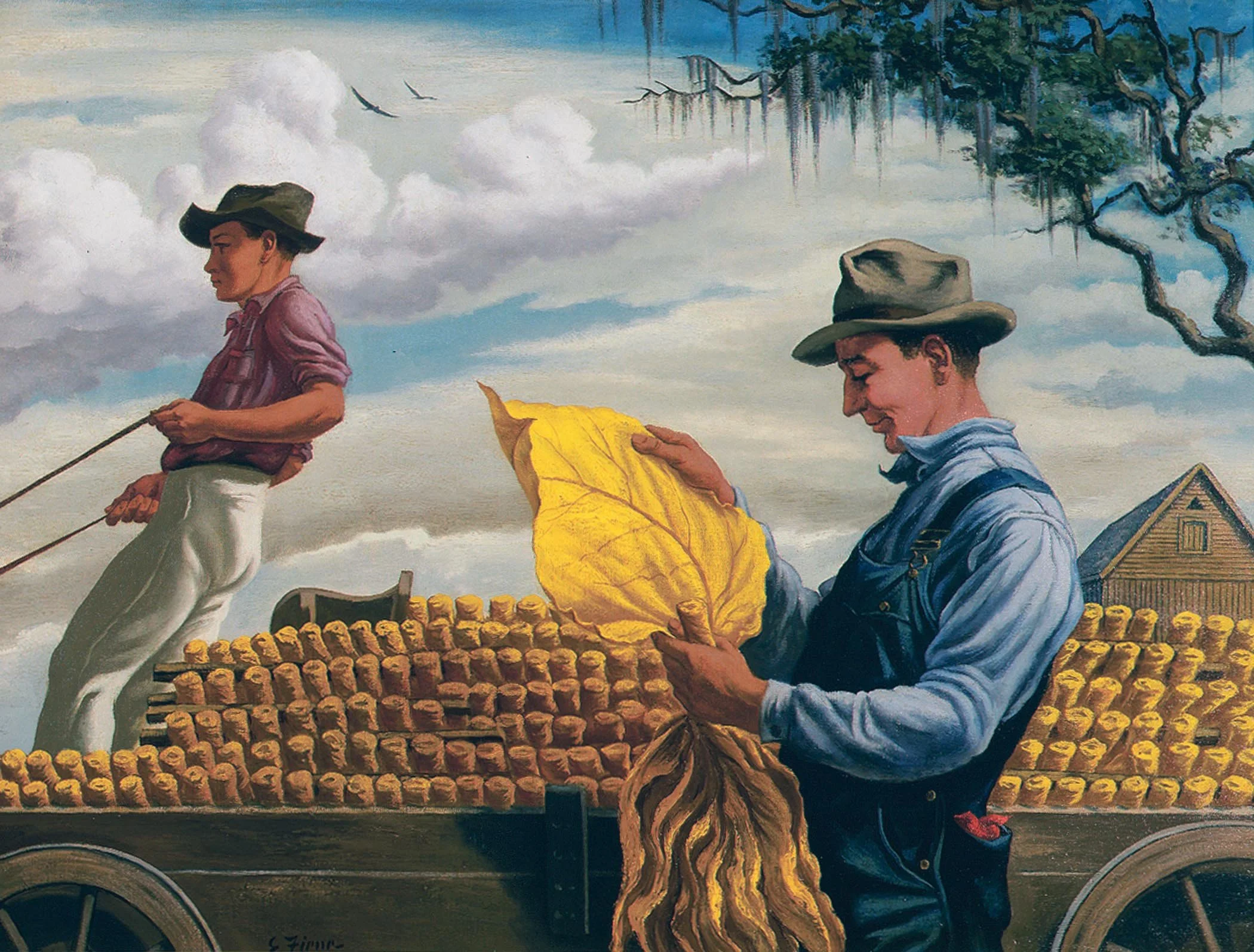
In 1941 George Washington Hill, president of American Tobacco Company, enlisted Reeves Lewenthal, director of the gallery Associated American Artists, to select preeminent American Scene artists to create paintings depicting the entire tobacco production, from planting and harvesting to curing and auction. Thomas Hart Benton, Ernest Fiene and Georges Schreiber were the first artists to receive the commission. In early 1941 they were sent to southern Georgia to sketch tobacco farmers at work. Benton and Fiene went on to paint tobacco farms in the Carolinas as well. The other artists who painted tobacco farms across the South over the next two years included: Arnold Blanch, Aaron Bohrod, Clarence Carter, James Chapin, John Steuart Curry, Joseph Hirsch, Irwin Hoffman, Peter Hurd, Joe Jones, Doris Lee, David Stone Martin, Fletcher Martin, Robert Philipp, Paul Sample, Lawrence Beall Smith and Frederic Taubes. Many of their paintings arrived at American Tobacco Company by 1942 and were displayed in the company's headquarters. The paintings were also used in advertisements for Lucky Strike cigarettes with the slogan "Paintings of tobacco country by America's foremost artists."
The tobacco paintings appeared in Lucky Strike ads in Life and Time magazines, as well as other publications, as early as February 1942. In 1942 and 1943 the commissioned works were featured in Lucky Strike ads that stated famous artists were painting from life in Tobacco Country: Northern Florida, Georgia, South Carolina, North Carolina, Virginia, Kentucky and Tennessee. From 1944 to 1947 the Lucky Strike ads continued to use the commissioned paintings but more emphasis was placed on the brand's logo and the artists often went unnamed.
These tobacco paintings by nineteen American Scene painters are important because they capture the farming of an historic American crop at the moment production was undergoing a major expansion. At the time of the commission there were as many as 1,602,000 tobacco farmers in the United States.
GEORGE BIDDLE’S PORGY AND BESS COMMISSION
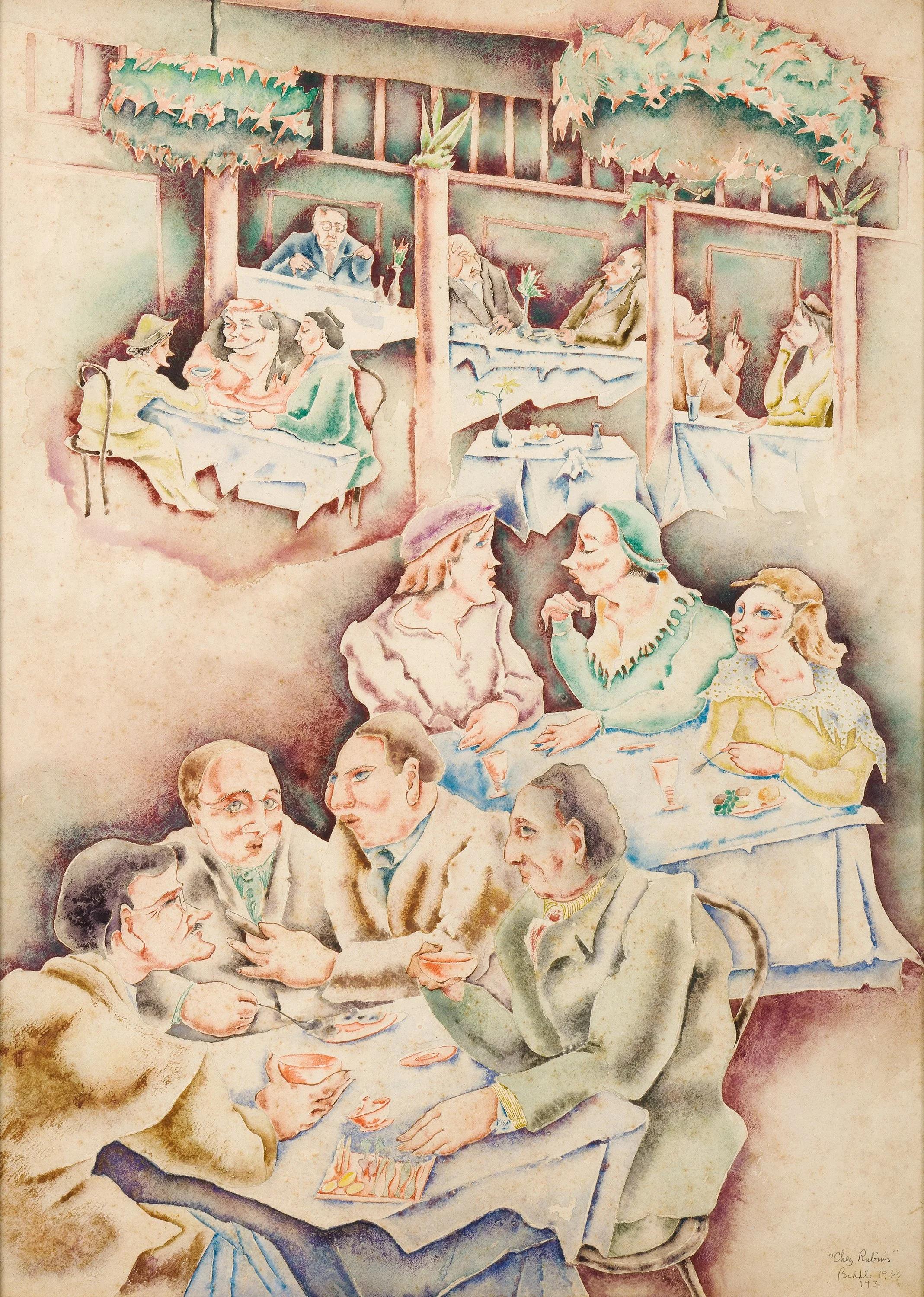
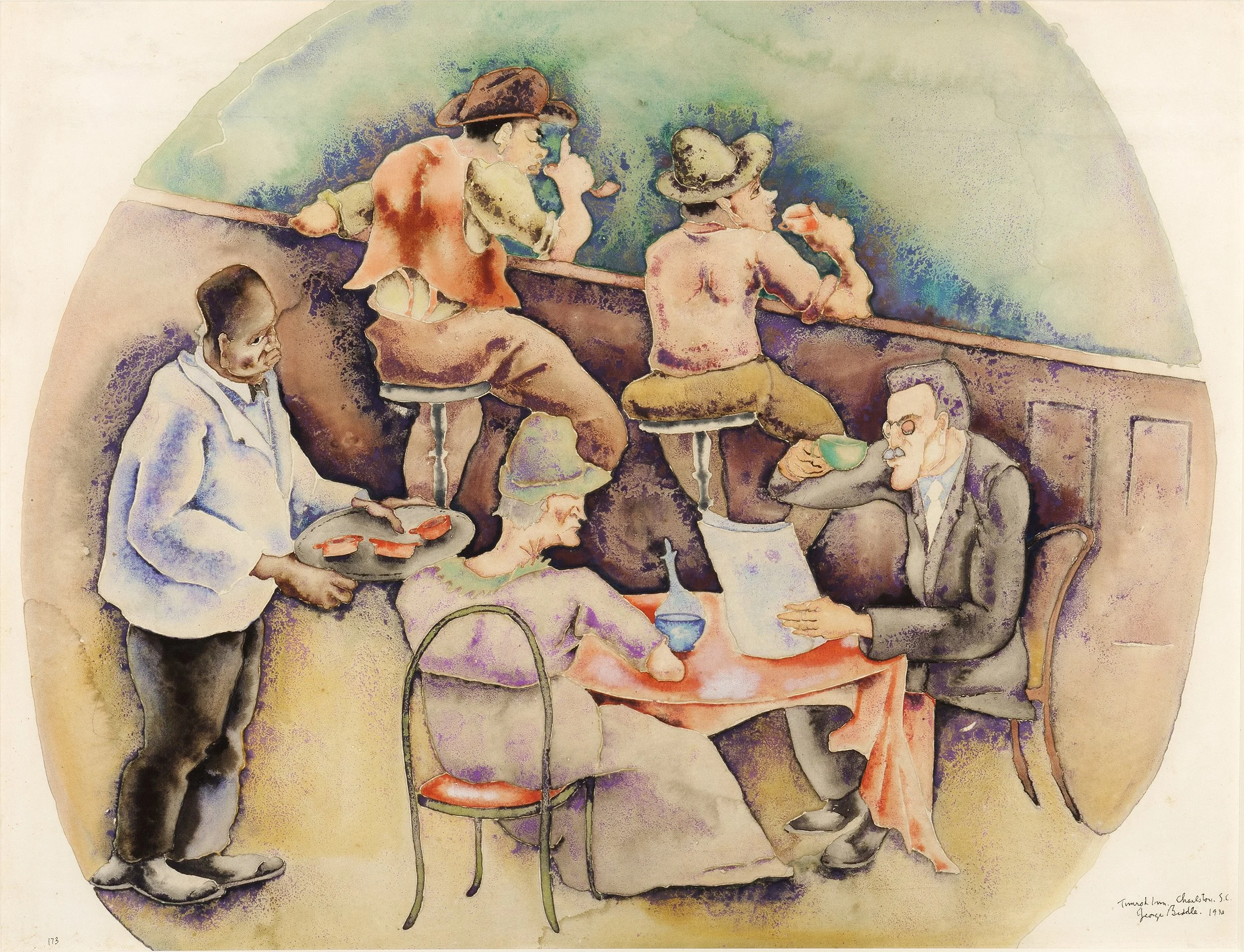
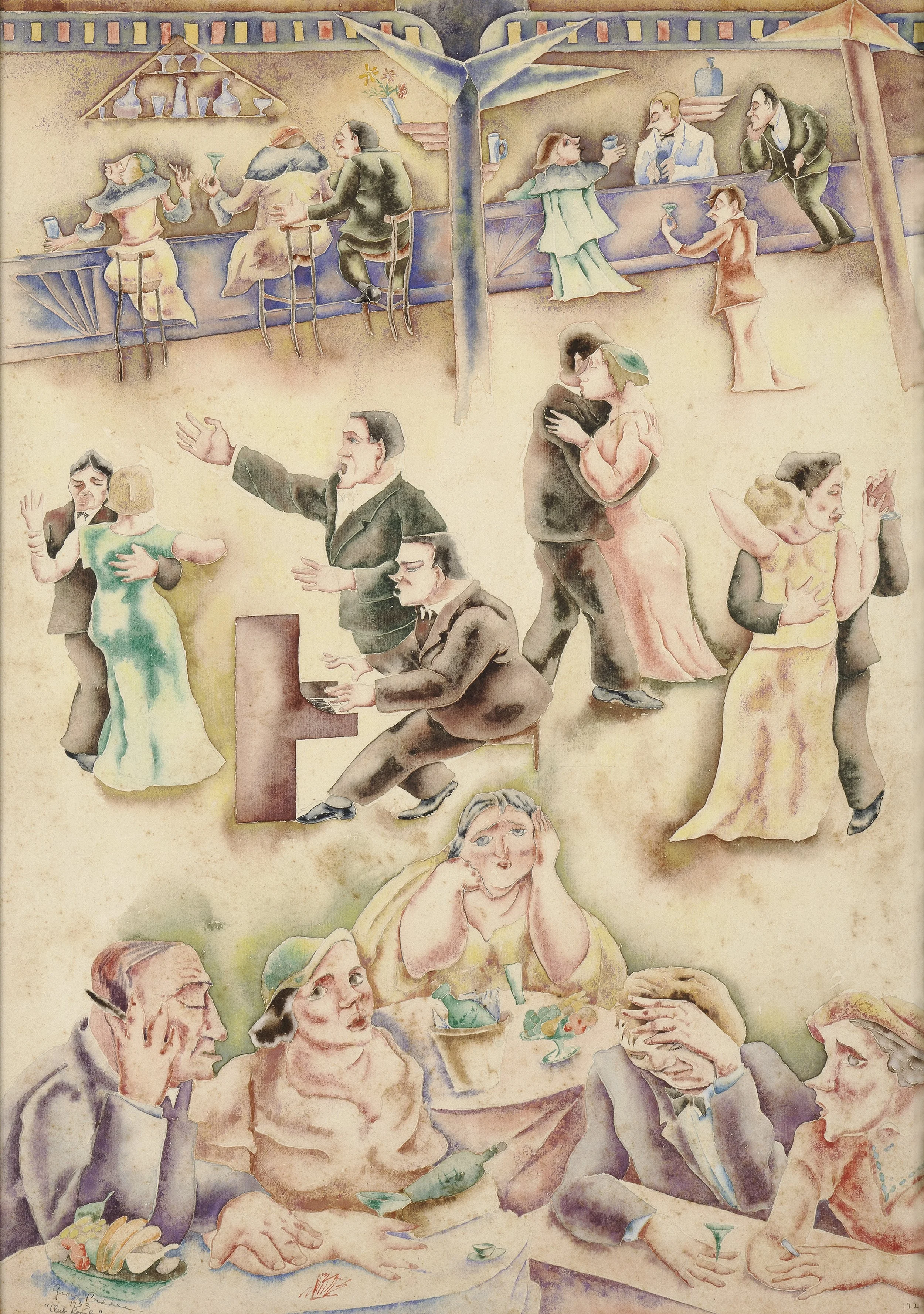
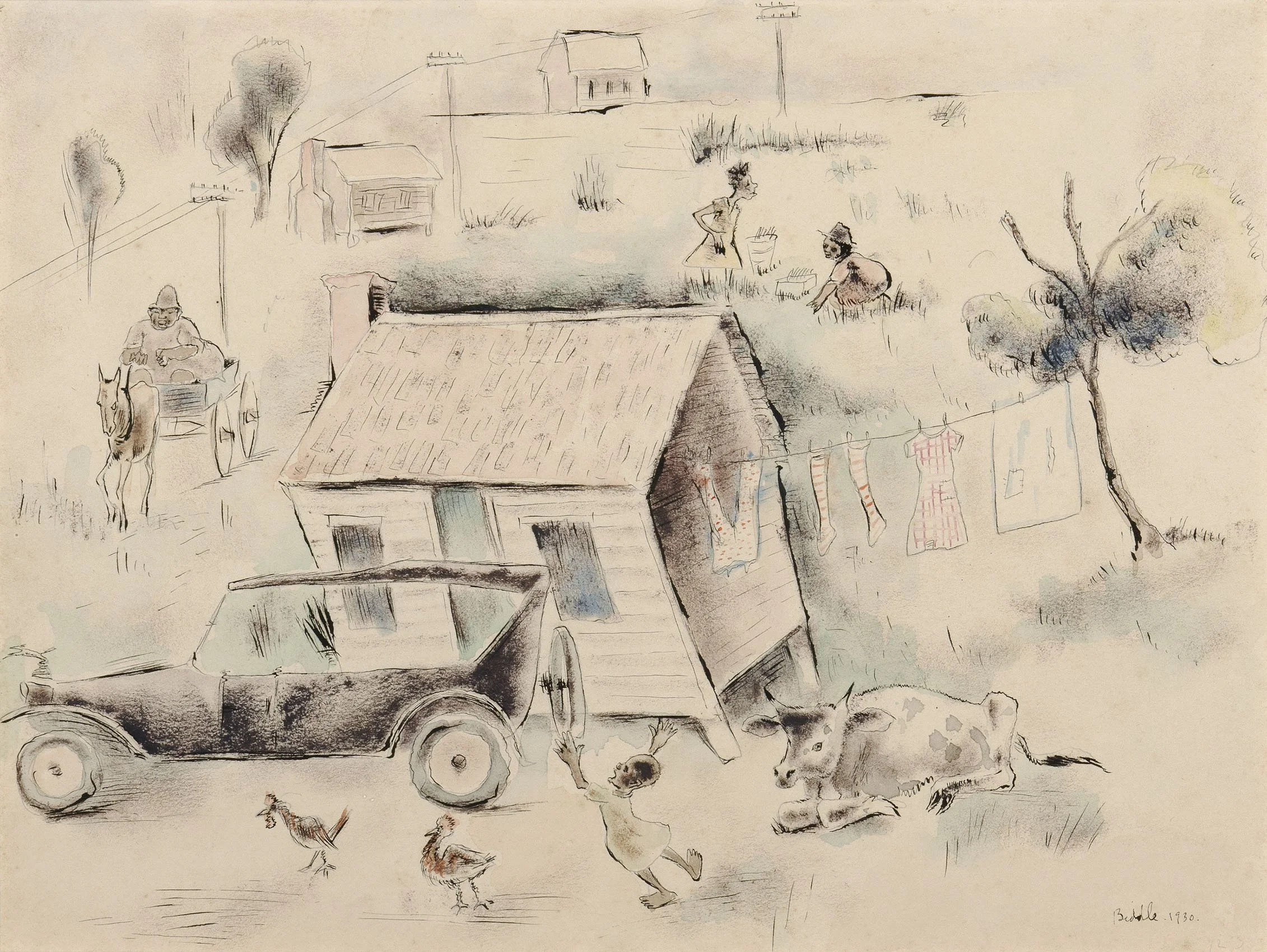
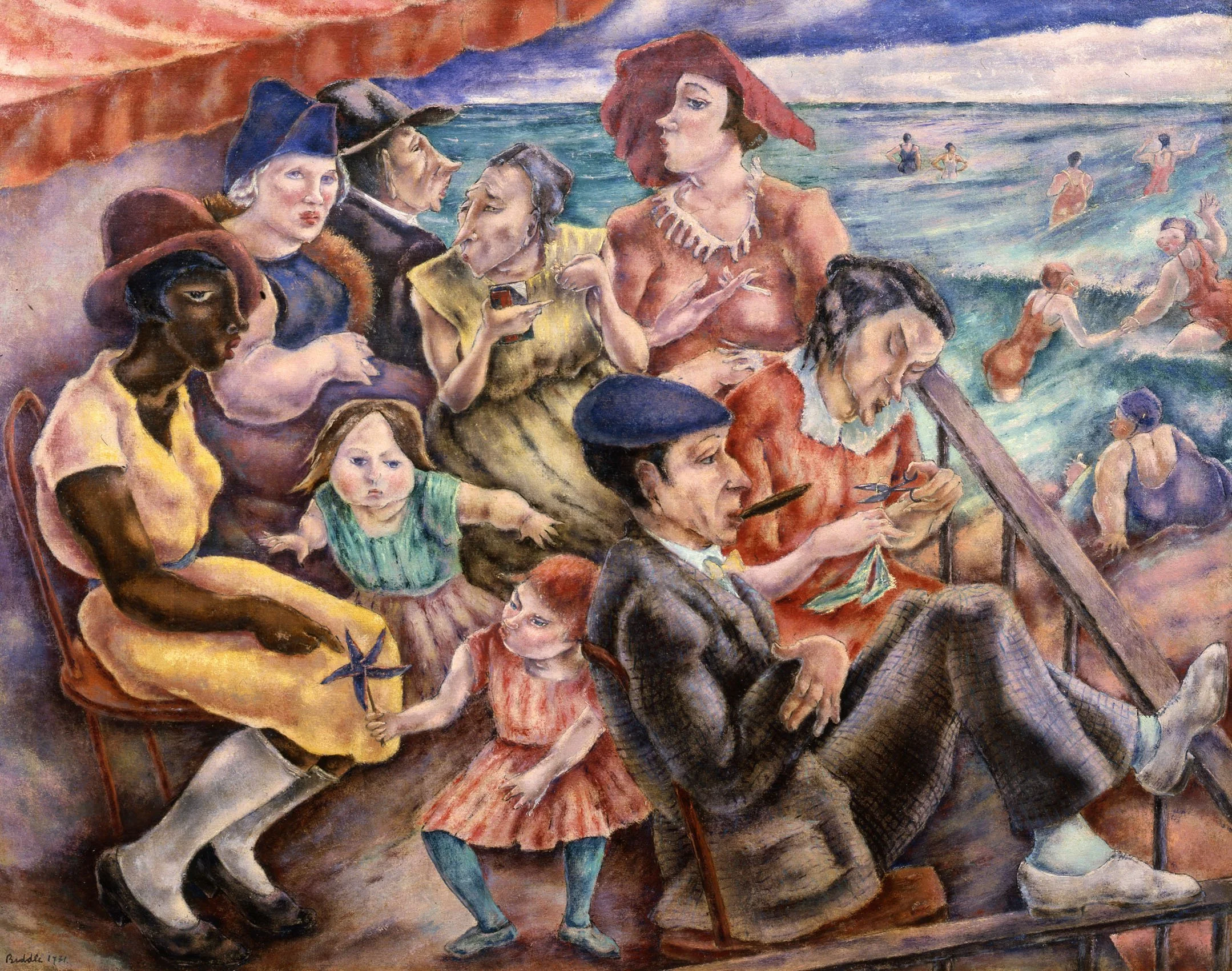
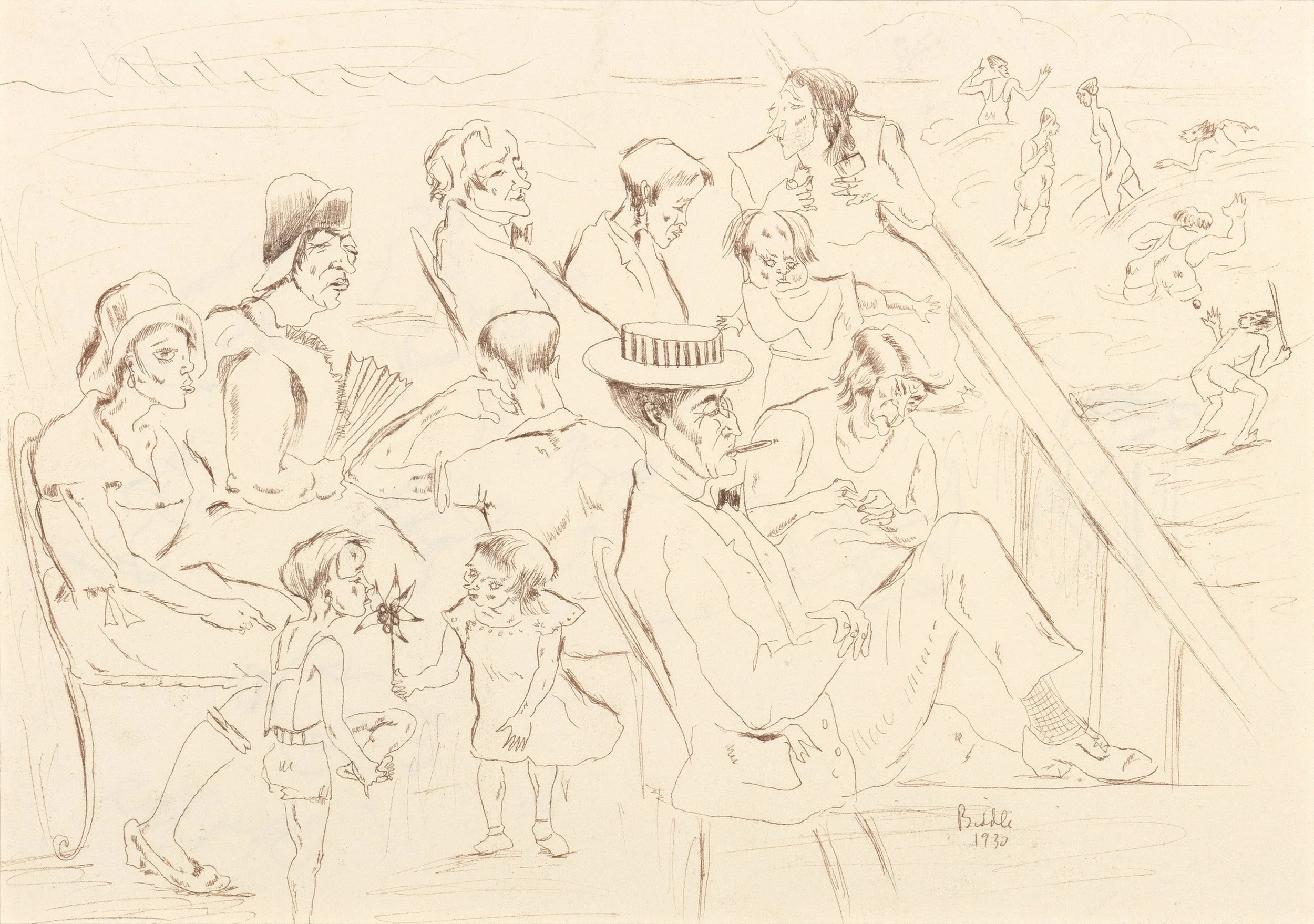
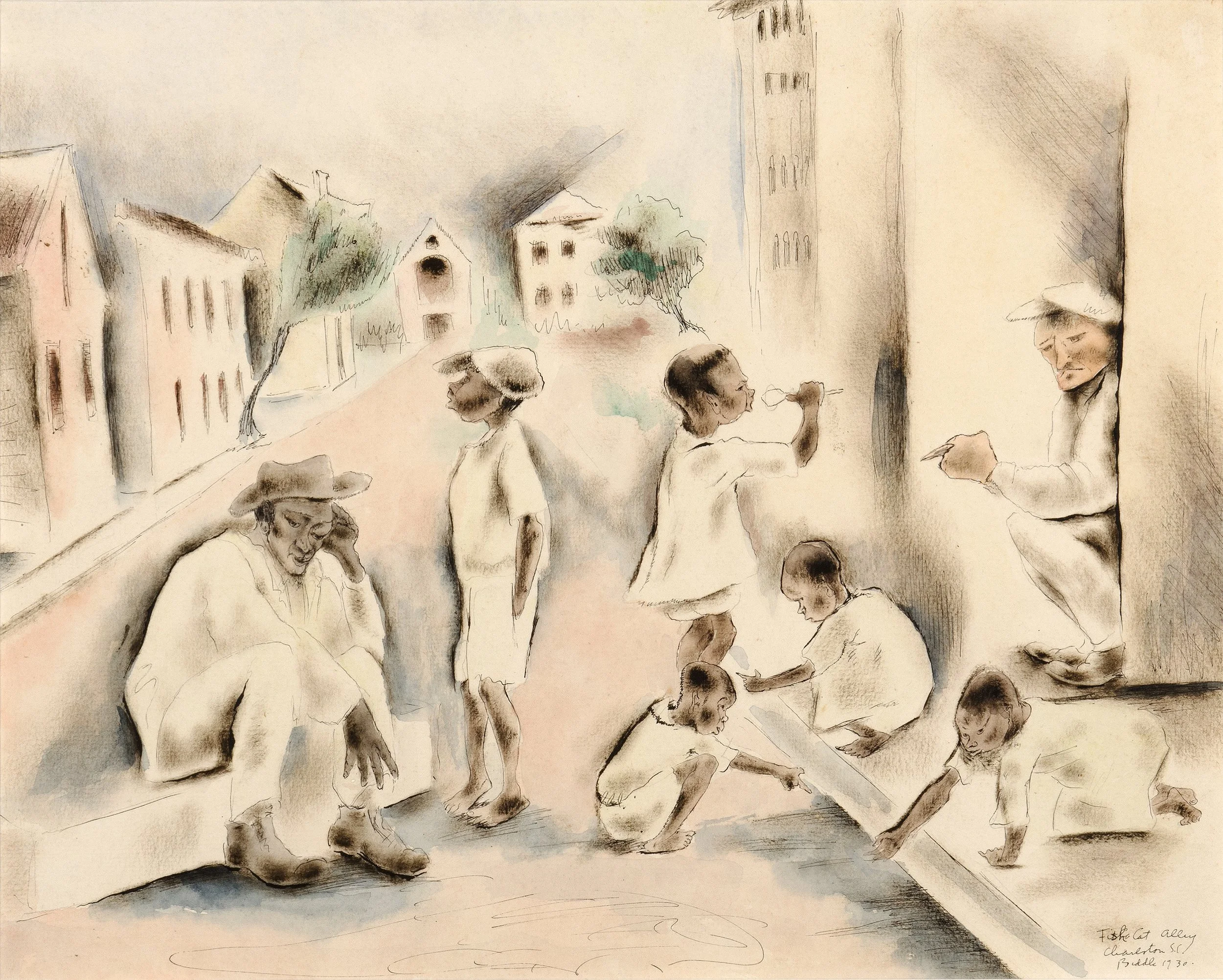
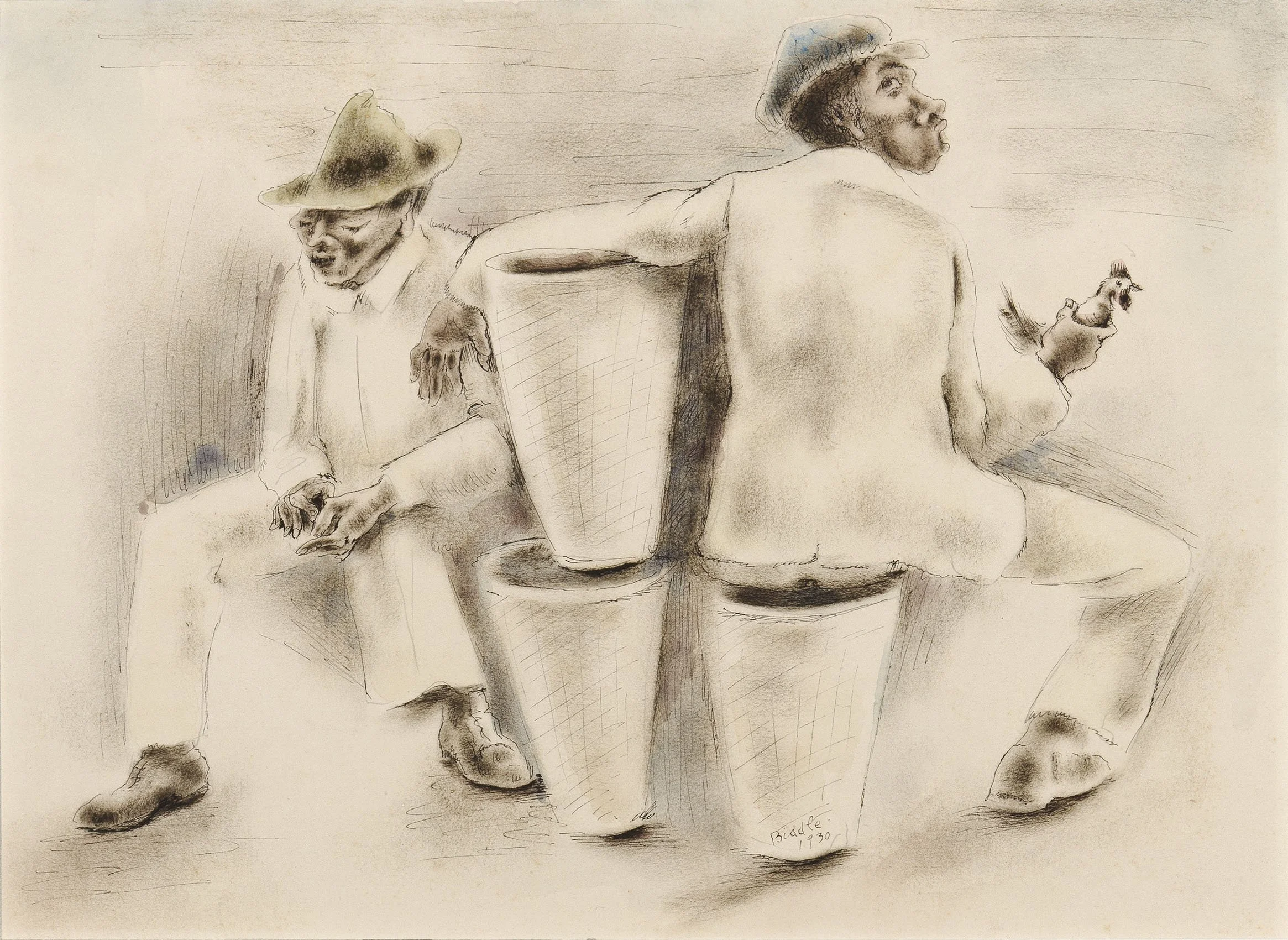
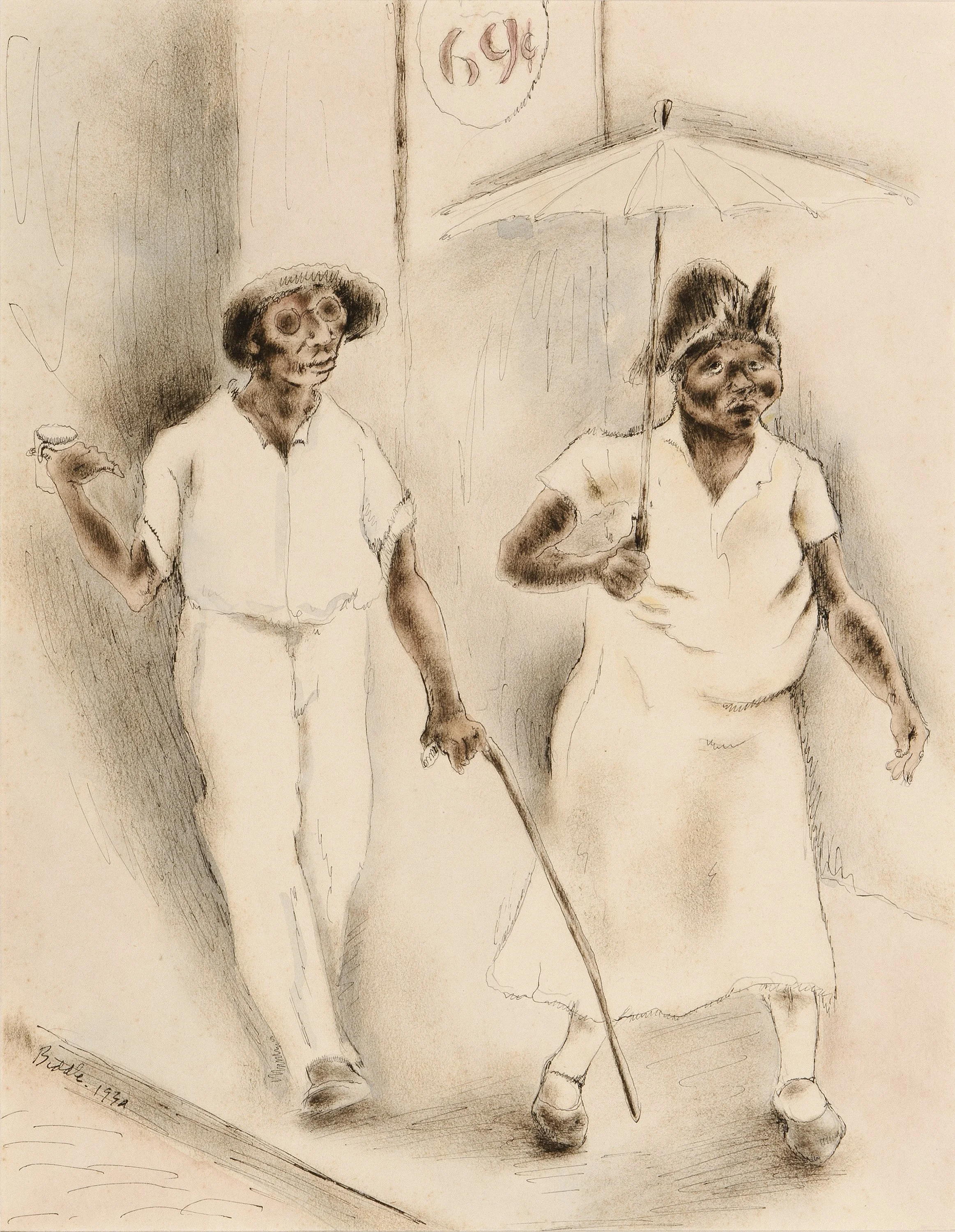
In 1930 George Biddle (1885-1973) went to Charleston, South Carolina at the request of DuBose Heyward, author of the novel Porgy, and George Gershwin, who was interested in expanding Heyward's novel into the opera Porgy and Bess. Guided by DuBose Heyward, Biddle spent the months of May and June sketching around Charleston and Folly Beach. In drawings such as Fish Cat Alley and Charleston Street Scene, one sees how the characters of the novel Porgy influenced whom Biddle sketched. During this trip Biddle produced a large folio of drawings of local people involved in their everyday activities.
When George Gershwin and DuBose Heyward signed a contract with the Theatre Guild in 1933 to develop Porgy and Bess into an opera, they selected George Biddle to illustrate the original libretto. Biddle used his drawings from the 1930 trip to Charleston as his source material. The libretto was published in 1935 alongside the opera's premiere in New York.
From the drawings Biddle also executed a group of large canvases from 1930 to 1933, including Fruit Market in the collection of the Greenville County Museum and The Battery, Evening in the collection of the Gibbes Museum. He also published a lithograph of Folly Beach in 1932.
DAVID FREDENTHAL'S TOBACCO ROAD
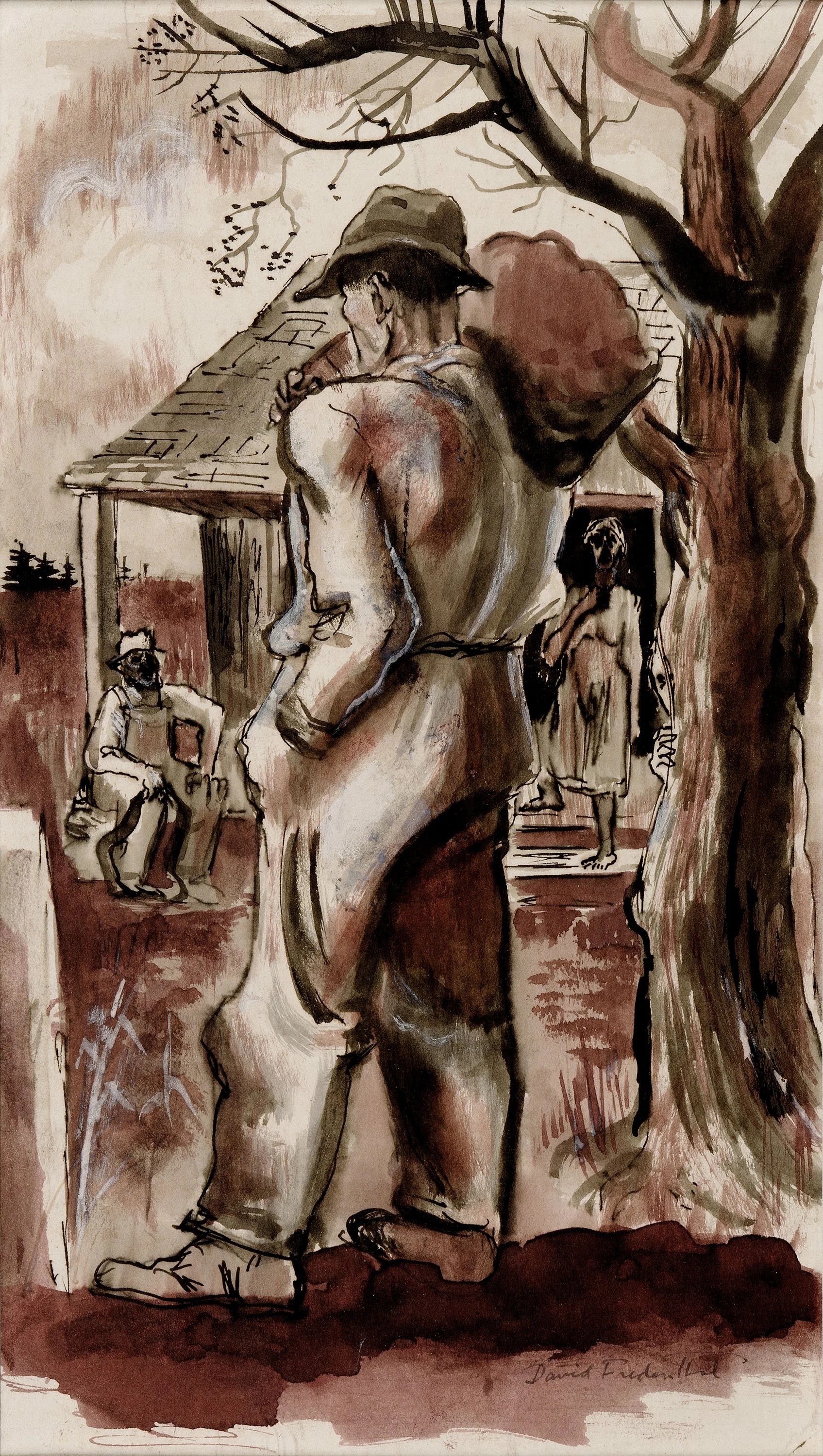
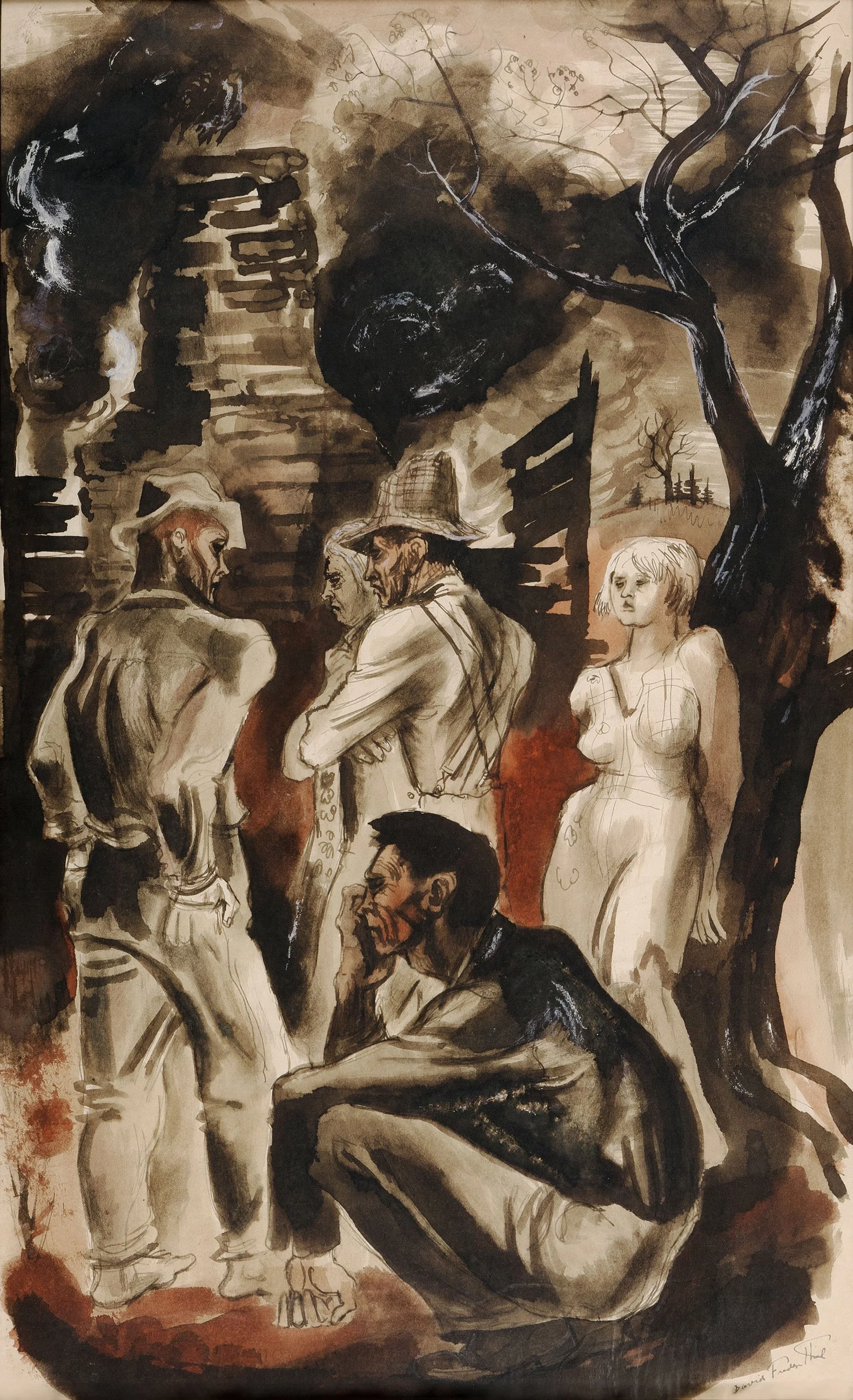
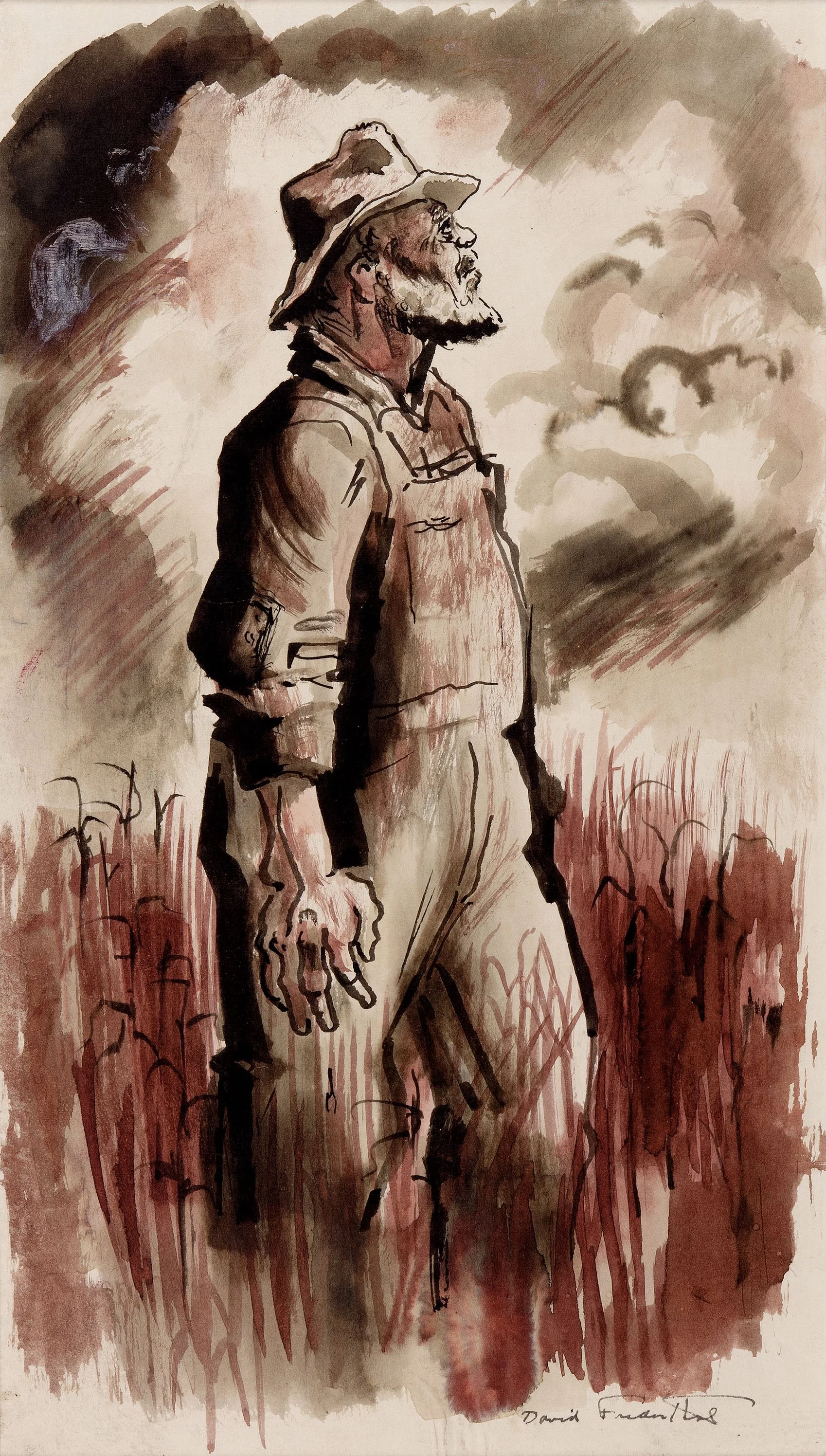
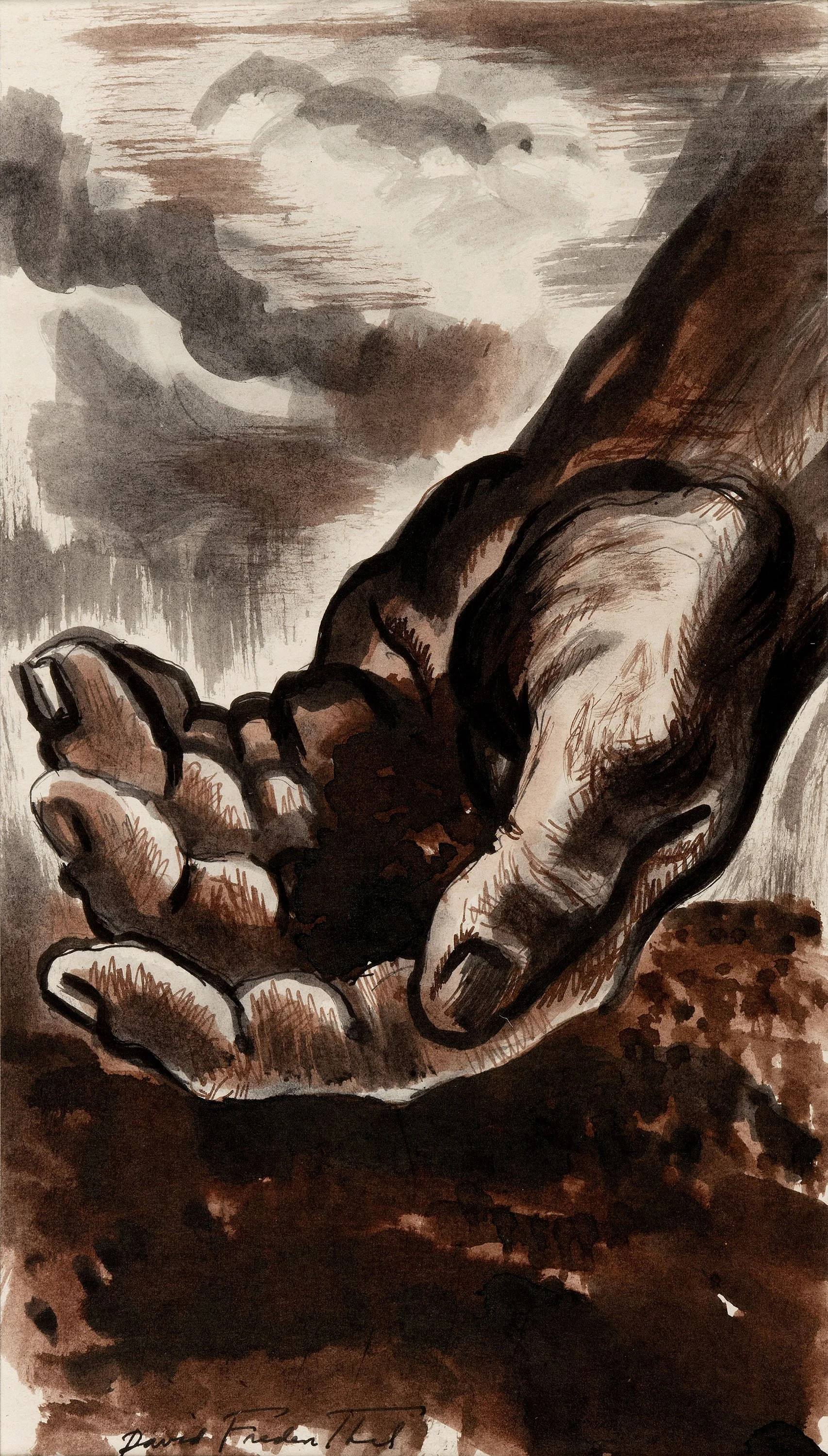
Well before David Fredenthal (1914-1958) was thirty, he already had two successful solo exhibitions at the Downtown Gallery in 1937 and 1938; received a MoMA fellowship to study in Italy; and was awarded a two-year Guggenheim Fellowship. In early 1940 while in Colorado finishing his Guggenheim Fellowship, Fredenthal learned Erskine Caldwell, author of Tobacco Road, had seen his paintings of factories and tenements in a recent exhibition at Columbia University and suggested Fredenthal should illustrate the deluxe edition of his novel to be published by Duell, Sloan & Pearce.
This news caused Fredenthal to head to Caldwell's hometown of Wrens, Georgia, where he introduced himself to Caldwell's father Reverend I.C. Caldwell. Fredenthal's companion on this adventure was Charles Shannon, an artist raised in Alabama who had received a Rosenwald Fund, traditionally a grant for African-American artists, to paint Southerners in 1938. Reverend Caldwell showed the artists around the area and introduced them to local sharecroppers. Fredenthal was in Georgia for two months before he returned to New York. Back home, Fredenthal then read Tobacco Road and adjusted his drawings of what he had seen to fit the story. For the final drawings, the key scenes were done in brush and brown ink for color reproduction and the remaining ones were executed in pen and black ink.
Fredenthal sent the drawings to Erskine Caldwell who convinced the publisher Duell, Sloan & Pearce they were perfect for the story. The illustrated edition was published in November 1940 and was selected by The New York Times as one of the best three illustrated books of 1941.
CHARLES WARD'S ROANOKE RAPIDS MURAL
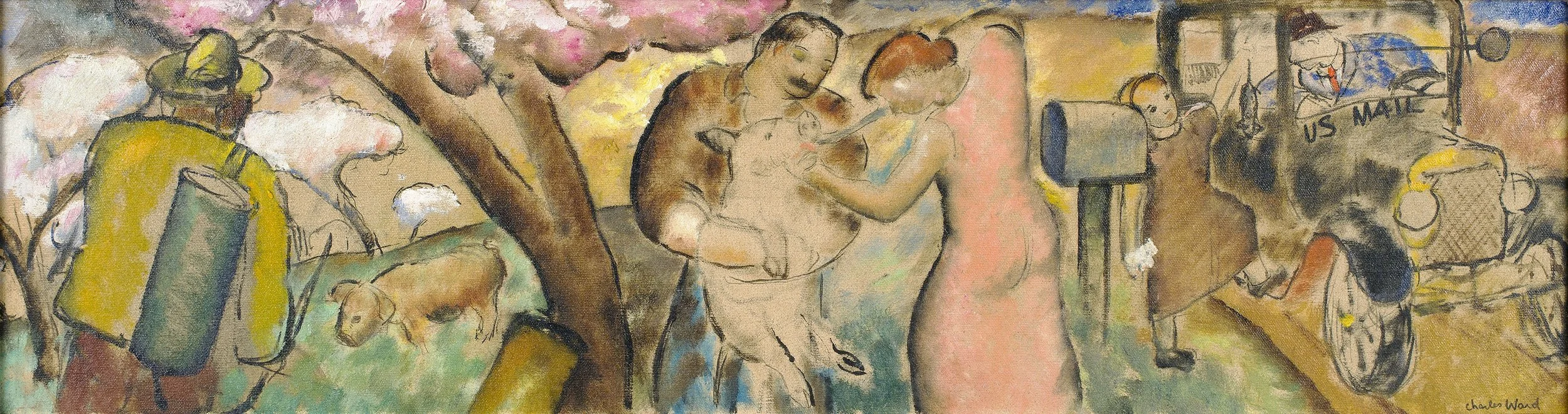
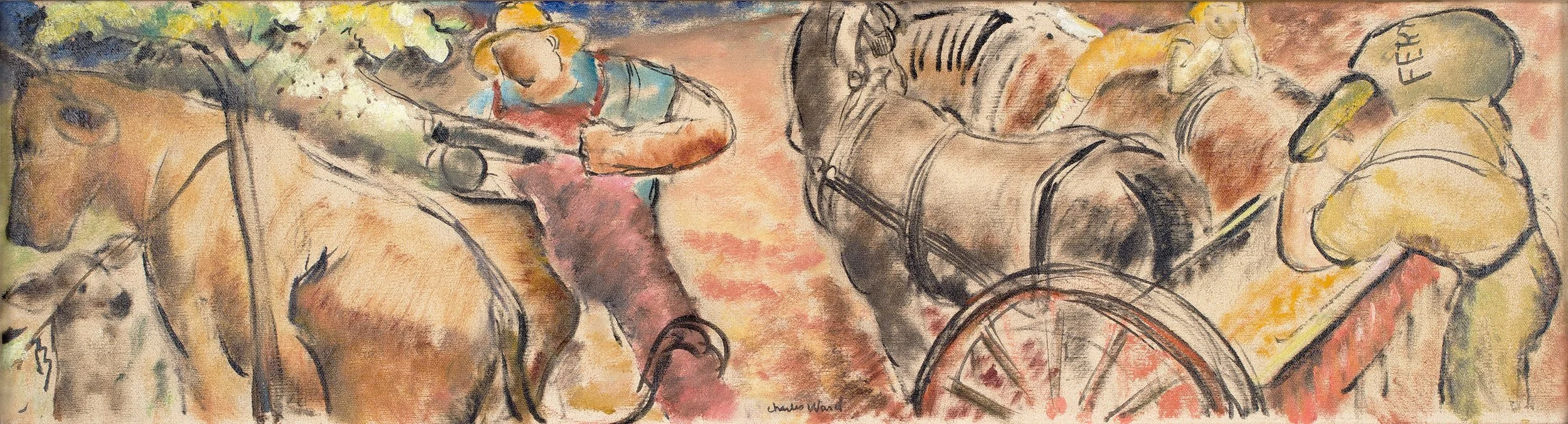
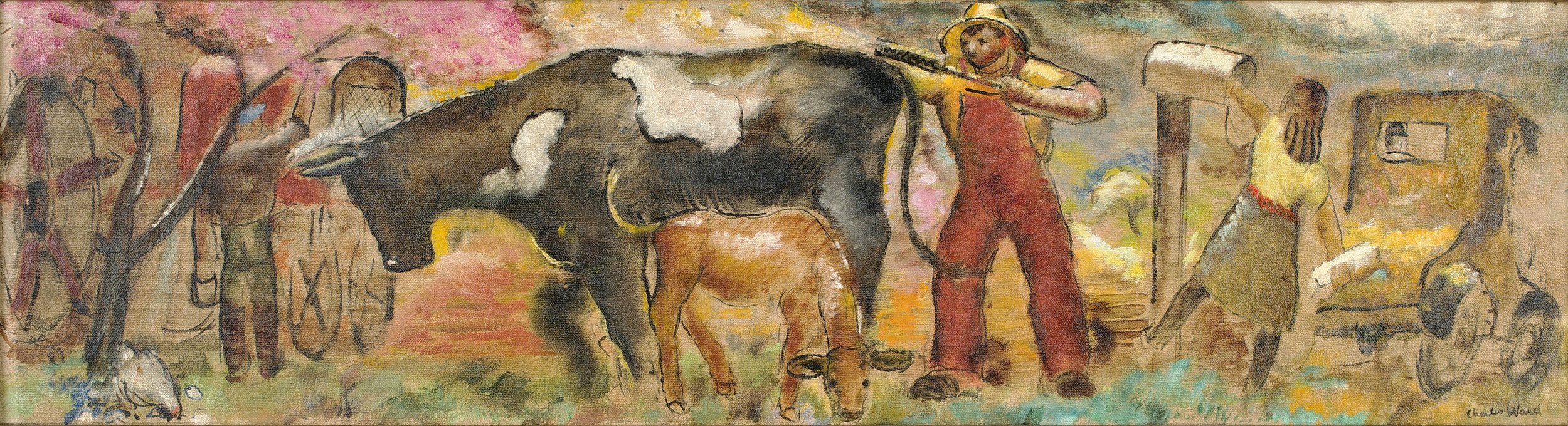
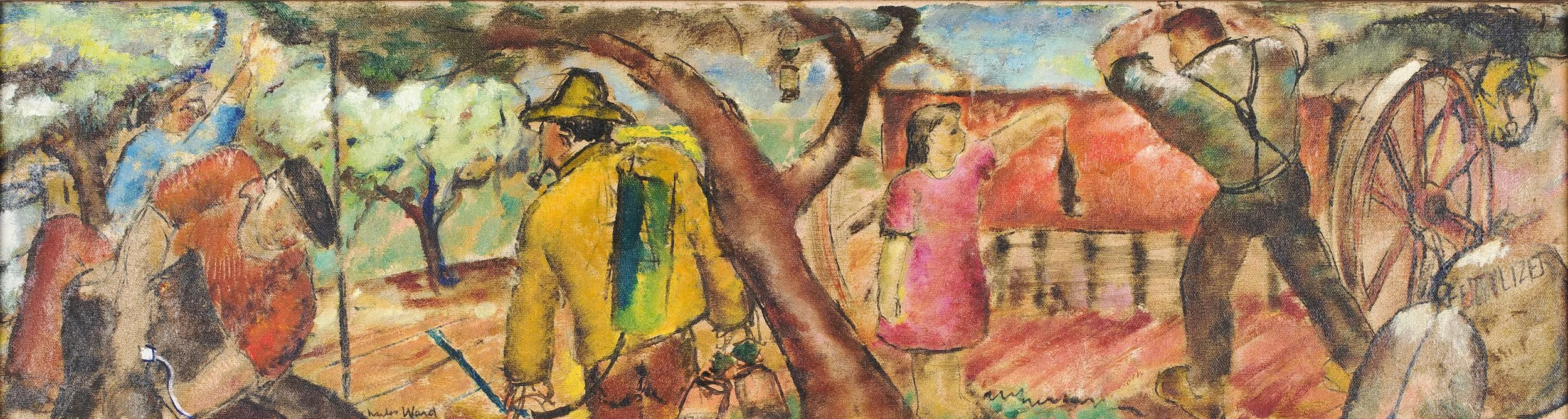
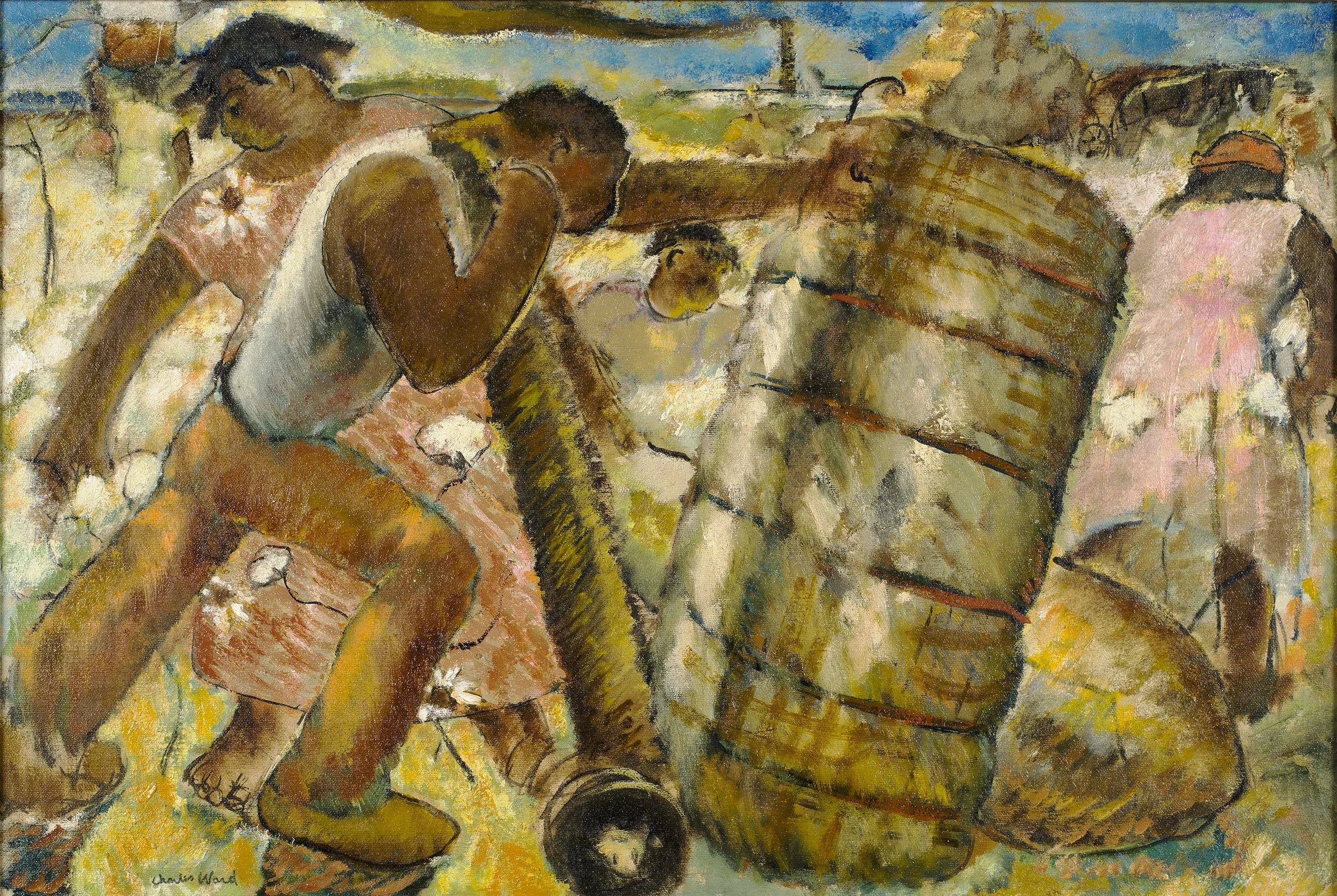
Charles Ward (1900-1962) created three murals for the Trenton Post Office: Progress of Industry installed in 1935 and Rural Delivery and Second Battle of Trenton installed in 1937. Ward was the first artist in the New Deal's public art sponsorship to submit his finished mural for final approval by a supervising architect. In April 1937 with the Trenton murals yet to be installed, Ward received a commission from the Treasury Department's Section of Fine Arts to create a mural for the Roanoke Rapids, North Carolina Post Office.
Ward made two sketching trips to Roanoke Rapids. He was impressed with the town's agriculture and industry with its six textile mills, one paper mill and one power plant. Ward submitted several mural designs for the project, including The Use of Chemicals in Relation to Agriculture and The Story of Cotton from Field to Dressmaker's Shop. The Story of Cotton shows Ward's desire to portray the full spectrum of Roanoke Rapids' cotton industry from field to mill. A small section of his cotton subject was selected and the finished mural was titled Cotton Pickers. Installed in the post office in 1938, the mural remains intact as a local businessman recently purchased the building for offices. One of Ward's cotton mural studies traveled across the country in an exhibition of New Deal Art in 1938-1939. Ward saw the exhibition at the Museum of Fine Arts, Houston in February 1939 on his way to Mexico for a four month painting trip.
In the four mural studies for The Use of Chemicals in Relation to Agriculture, Ward shows how farmers used products such as fertilizer, insecticides, rat poison, and Japanese beetle traps to protect their livestock and crops. The delivery of these products by mail is included in two of the studies showing Ward's consideration of where these murals would be viewed.